Table of Contents
- Why Book a Roof Life Extension Assessment
- Prepare Your Home Before the Assessment
- Understanding Your Roof Inspection Checklist
- What Happens During Your Assessment
- Reading Your Roof Condition Report
- Using Assessment Results for Roof Inspection for Insurance Claims
- Creating Roof Maintenance Documentation After Assessment
- Next Steps: From Assessment to Rejuvenation
- Frequently Asked Questions
Last Updated: October 11, 2026
Why Book a Roof Life Extension Assessment
A roof life extension assessment is a professional evaluation of your roof's current condition, structural integrity, and remaining useful life. It determines whether your roof qualifies for rejuvenation treatment or if replacement is truly necessary.
Many homeowners receive costly replacement quotes without understanding their actual options. An assessment gives you clarity on whether your roof can be restored or if replacement is genuinely necessary.
At Roof Revive LLC, we conduct honest roof evaluations using licensed professionals who employ drone technology to ensure accurate assessments. Our goal is to give you the truth about your roof's condition.
An assessment also creates critical documentation. If your insurance carrier has flagged your roof or threatened non-renewal, a professional assessment provides proof that your roof is being actively maintained. A detailed report from a certified inspector carries real weight in those conversations.
Prepare Your Home Before the Assessment
Clear roof access points. Ensure attic access is unobstructed so the inspector can examine the underside of your roof for moisture, ventilation problems, or structural issues. Clear any boxes or debris from the attic space.
Document existing damage. Take photos of any leaks, staining, sagging, or visible wear and note their locations and dates. This helps the inspector prioritize their examination.
Trim tree branches near the roof. Overhanging branches hide portions of your roof and obstruct assessment. Trim them back to improve visibility.
Know your roof's age. Have the installation date ready if available; it helps calculate remaining useful life.
Ensure safe access. Clear ladders and walkways. If roof access is unsafe, mention this when booking; drone technology can evaluate difficult-to-reach areas.
Understanding Your Roof Inspection Checklist
Shingle condition and wear patterns form the foundation of the assessment. The inspector examines shingles for granule loss, cracking, curling, blistering, and discoloration. Granule loss exposes asphalt to UV damage and accelerates deterioration.
Roof age and installation date provide context for condition findings. Age helps determine whether wear is normal or accelerated by environmental factors, poor ventilation, or maintenance issues.
Flashing integrity and seal condition matter because flashing is where water penetration most often begins. The inspector checks where the roof meets chimneys, vents, skylights, and walls for gaps, cracks, or deteriorated caulking.
Ventilation and moisture assessment evaluates whether your attic has proper airflow. Poor ventilation accelerates deterioration and can lead to mold or structural damage. The inspector checks soffit vents, ridge vents, and attic conditions.
Structural soundness includes checking for sagging, soft spots, rot, and abnormal flexing. The inspector examines the attic for signs of water damage.
Waterproofing and seal condition examines whether the roof sheds water properly. The inspector looks for standing water, poor drainage, or pooling.
| Assessment Component | What's Evaluated | Why It Matters |
|---|---|---|
| Shingle condition | Granule loss, cracking, curling, discoloration | Indicates UV damage and remaining protective coating |
| Flashing integrity | Seals around vents, chimneys, skylights | Primary entry points for water penetration |
| Ventilation | Soffit and ridge vents, attic airflow | Prevents moisture buildup and premature aging |
| Structural integrity | Sagging, soft spots, rot | Determines if roof can support treatment or needs replacement |
| Waterproofing | Drainage patterns, water shedding | Confirms roof is functioning as designed |
| Roof age | Installation date and years in service | Contextualizes condition findings |
What Happens During Your Assessment
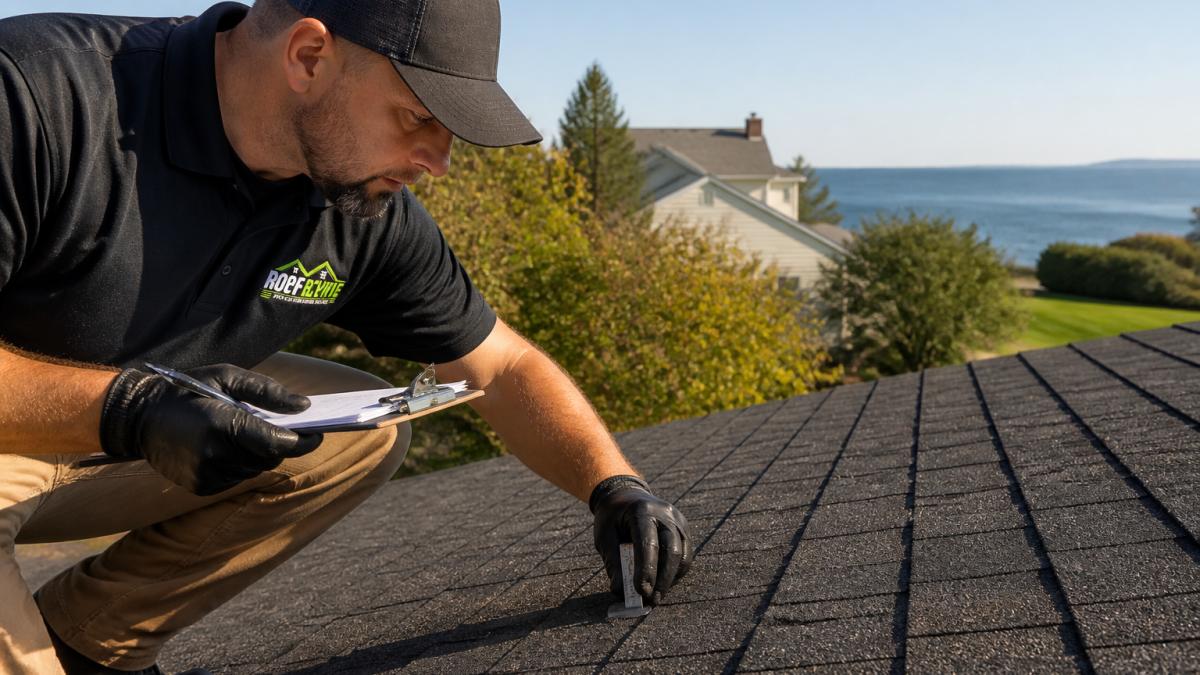
The inspector begins by walking your property and examining the roof from the ground, noting visible condition, surrounding trees, and layout to plan their approach.
They access the roof by ladder or drone to examine shingle condition across all areas, including valleys, ridges, and sun-exposed sections. Detailed photos document condition and become part of your permanent record.
The inspector accesses your attic to evaluate ventilation, moisture, structural support, and water infiltration. They check the underside of roof decking for staining, soft spots, or mold. This interior assessment often reveals issues not visible from above.
Throughout the inspection, the professional documents findings with measurements, photos, and notes. Specialized tools measure shingle thickness and assess granule loss quantitatively, providing objective evidence of your roof's condition.
The inspection concludes with an initial conversation where you can ask questions. The full assessment and recommendations come in the written report.
Reading Your Roof Condition Report
The report begins with basic information: your address, roof age, roof type, and inspection date, establishing the official record.
The condition summary describes your roof's overall state using standardized language: good, fair, poor, or candidates for restoration or replacement. This is what insurance carriers focus on when assessing risk.
Detailed findings break down specific areas: shingle condition, flashing, ventilation, structural integrity, and damage. Each section explains what was found and why it matters.
The report includes photographic documentation: close-ups of problem areas and wide shots showing overall condition. These photos are invaluable when discussing roof condition with insurance companies.
Recommendations form the action section. Based on findings, the inspector recommends rejuvenation treatment, repair, or replacement. If rejuvenation is recommended, the report explains why: the structure is sound, shingles have adequate life remaining, and treatment can extend life.
The report also includes an estimated remaining useful life, how many additional years your roof is expected to function. This projection helps you understand your timeline for future decisions. A roof with 8-10 years remaining life may be a good candidate for treatment to extend that to 20+ years. A roof with only 2-3 years left might not be worth treating.
Using Assessment Results for Roof Inspection for Insurance Claims
Insurance carriers increasingly require documented roof assessments, especially for older homes or roofs that have been flagged as concerns (How Your Roof Influences Your Home and Business Insurance). Your assessment report becomes critical evidence in those conversations.
When your insurance company requests a roof inspection for insurance claims or threatens non-renewal, having a professional assessment report demonstrates that you're taking roof maintenance seriously. It shows you're not ignoring the issue, you're actively monitoring and maintaining your roof. Carriers view this positively.
Share your assessment report with your insurance agent or carrier proactively. Don't wait for them to demand an inspection. Sending them documentation that your roof has been professionally evaluated, that the structure is sound, and that you have a plan to extend its life strengthens your position.
The report's condition assessment and remaining useful life estimate are what insurers care about most. If your roof is assessed as fair condition with 8+ years of remaining life, that's a strong argument for continued coverage. If it's poor condition with minimal life remaining, the insurer may still push for replacement, but at least you have professional documentation supporting your position.
If the assessment recommends rejuvenation treatment, your insurance carrier may view that favorably. It shows the roof isn't abandoned, it's being restored to extend its life. Some carriers even offer modest discounts for documented roof maintenance. Ask your agent whether your carrier has such incentives.
Keep copies of your assessment report for your records. If you ever sell your home, this documentation becomes a selling point. Buyers appreciate knowing the roof's condition has been professionally evaluated and that it has years of life remaining. It reduces buyer anxiety about hidden roof problems.
Creating Roof Maintenance Documentation After Assessment
Documentation is the currency of insurance conversations. After your assessment, create a maintenance record that demonstrates ongoing care of your roof.
If you proceed with rejuvenation treatment through Roof Revive LLC, you'll receive comprehensive documentation of the work completed. This includes before-and-after photos, detailed treatment records, and a 6-year transferable warranty. This warranty is proof that your roof has been professionally treated and is expected to perform reliably for years to come. Keep this documentation with your home records.
Beyond treatment, maintain a simple maintenance log. Document any inspections, minor repairs, or debris removal. Note the date and what was done. This log, combined with your professional assessment report, creates a clear picture of active roof management. Insurance carriers want to see that homeowners aren't neglecting their roofs. As part of your regular maintenance routine, consider scheduling free complimentary gutter cleaning to ensure proper water drainage and prevent moisture-related roof damage.
Photograph your roof seasonally or after severe weather. If you notice anything unusual, missing shingles, debris accumulation, or water staining, document it with photos and dates. This visual record helps you track changes over time and provides evidence if you need to file a claim or discuss condition with your insurance carrier.
Store all roof-related documents together: your original assessment report, treatment documentation and warranty, maintenance logs, photos, and any repair receipts. Digital copies in cloud storage ensure you have access even if physical documents are lost. When you speak with insurance carriers or eventually sell your home, you can quickly produce comprehensive documentation of your roof's condition and care.
Next Steps: From Assessment to Rejuvenation
After receiving your assessment report, you have clear options based on the findings and recommendations.
If your roof is assessed as a candidate for rejuvenation, the next step is understanding the treatment process and timeline. Roof rejuvenation using bio-based treatment restores lost oils to asphalt shingles, reseal granules, and restore flexibility. The process extends your roof's life by up to 18 years and is completed in a single day.
The treatment is most effective on roofs that still have structural integrity and adequate remaining life. If your roof is 12-15 years old, in fair condition, and structurally sound, treatment can add significant years of life at a fraction of replacement cost.
Schedule a follow-up consultation with Roof Revive LLC to discuss your assessment findings and whether your roof qualifies for treatment. Our team reviews your report, answers questions, and explains exactly what the rejuvenation process involves. There's no pressure to decide immediately, understanding your options is the priority.
If your roof is not a candidate for treatment based on assessment findings, you have time to plan for replacement. Your assessment report gives you realistic timeline information. If your roof has 5+ years of remaining life, you can budget and plan for replacement without emergency pressure.
Document everything. Keep your assessment report, any treatment documentation, and maintenance records organized and accessible. This documentation protects your home's value and gives you evidence to support conversations with insurance carriers or future buyers.
Your roof assessment is the foundation for every decision that follows. It replaces guesswork with data, uncertainty with clarity. Whether your roof qualifies for rejuvenation treatment or needs replacement, an honest professional assessment ensures you're making the right choice for your home and budget.
Frequently Asked Questions
How do I book a roof life extension assessment?
Contact Roof Revive to schedule your free assessment. Our team will confirm your location and arrange a convenient time. We use satellite measurements and drone technology to evaluate your roof thoroughly. The process is straightforward, no pressure, no obligation. You'll receive a detailed roof condition report with professional recommendations based on your roof's actual condition.
What should I prepare before a roof inspection?
Clear the roof perimeter of debris and ensure easy access to your attic if needed. Remove vehicles from the driveway so our team has space to work safely. Have your roof's age and any prior inspection records available. Make a note of any visible damage or leaks you've noticed. This preparation helps us conduct a thorough, efficient assessment and deliver accurate findings.
Can a roof assessment help with an insurance claim or non-renewal?
Yes. Our roof inspection for insurance claims provides documented, lab-tested evidence of your roof's condition. We deliver before-and-after photo documentation and a professional condition report that insurers recognize. Many homeowners use this assessment to address non-renewal letters or coverage questions. The detailed findings demonstrate that your roof is a candidate for restoration rather than replacement, which can support your case with insurance carriers.
How long does a roof life extension assessment take?
Most assessments are completed in a single day. Our licensed professionals use satellite imagery and drone measurements to gather comprehensive data without unnecessary disruption. You'll receive your roof condition report with findings and recommendations shortly after. The entire process, from booking to receiving your detailed report, moves quickly so you can make informed decisions about your roof's future.