Table of Contents
- Why Eco-Friendly Roof Maintenance Matters for Asphalt Shingles
- How to Clean Asphalt Shingles Without Harming the Environment
- Your Asphalt Shingle Roof Inspection Checklist
- How Long Do Asphalt Shingles Last?
- What Is an Asphalt Shingle Rejuvenation Treatment?
- Seasonal Maintenance Calendar for Eco-Friendly Roof Care
- Choosing the Right Eco-Friendly Roof Maintenance Option
- Frequently Asked Questions
Last Updated: October 21, 2026
Why Eco-Friendly Roof Maintenance Matters for Asphalt Shingles
Eco-friendly roof maintenance is the practice of extending an asphalt shingle roof's service life through low-impact cleaning, inspection, and restoration instead of defaulting to tear-off and replacement. At Roof Revive LLC, we see the same pattern constantly: a structurally sound roof gets condemned because its granules have worn thin. A full replacement generates a huge volume of roofing waste, and much of it ends up in landfills.
The Environmental Cost of Premature Replacement
Every premature tear-off carries a hidden bill. Old shingles come off by the ton, they travel to a landfill, and a whole new manufacturing cycle begins.
The math favors maintenance. A roof that lasts 25 years instead of 15 avoids one full replacement cycle. That single decision keeps waste out of landfills and cuts the energy tied to making and hauling new materials.
Salt air along the coast makes this sharper. Coastal homes in Delaware and southern Pennsylvania face faster granule loss from salt and moisture. A maintenance routine protects that investment before replacement becomes the only option.
How to Clean Asphalt Shingles Without Harming the Environment
Cleaning is the maintenance task homeowners most often get wrong, and it is also the one with the clearest environmental stakes. The wrong method strips granules off the shingle and sends cleaner, algae, and grit into gutters, soil, and storm drains. Done correctly, cleaning removes the organic growth that holds moisture against the shingle without accelerating wear.
Know What You Are Removing
Most dark streaking on asphalt shingles is not dirt. It is usually gloeocapsa magma, a cyanobacterium that feeds on the limestone filler in shingles and spreads fastest on north-facing and shaded slopes. Moss and lichen are separate problems: moss holds water against the shingle and lifts edges, while lichen bonds tightly and is harder to remove without granule loss. Identifying the growth tells you how aggressive you can afford to be.
Step-by-Step Low-Impact Cleaning
- Pick the right day. Overcast, moderate weather slows evaporation so the cleaner stays in contact long enough to work and does not dry into a residue. Avoid cleaning in direct midday heat or when rain is forecast within 24 hours.
- Clear the roof surface first. Remove leaves, branches, and debris by hand or with a soft broom. Debris traps moisture and hides damage you need to see.
- Pre-wet surrounding plants and surfaces. Lightly water landscaping, siding, and walkways before you start so any overspray is diluted rather than absorbed at full strength.
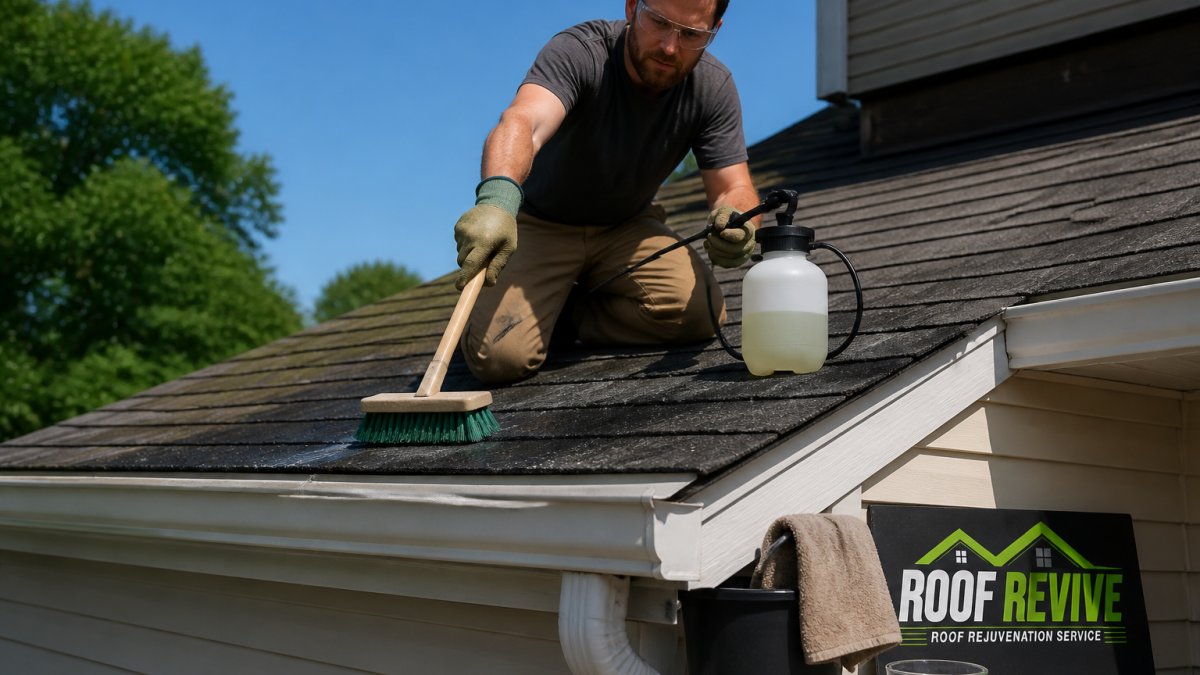
- Apply a low-toxicity cleaner with a pump sprayer. Dilute according to the label. Oxygen-based cleaners and plant-safe formulations are gentler on runoff than bleach-heavy products, which can harm plants and aquatic life when they reach storm drains.
- Let the product dwell, then scrub gently. Give the cleaner time to loosen growth, then use a soft-bristle brush on stubborn spots. Never use a wire brush or a stiff deck brush; both tear granules loose.
- Rinse with low pressure. A garden hose with a standard nozzle is enough. Pressure washing is covered below for a reason.
- Control the runoff. Direct rinse water onto a lawn or gravel area rather than into a storm drain. Where runoff is heavy, use a tarp or absorbent barrier at the downspout to catch grit and residue before it leaves the property.
What to Avoid on Asphalt Shingles
- Bleach-heavy products at full strength. They can dull the surface and harm plants and soil where runoff lands.
- Solvent-based cleaners. They can soften asphalt and shorten shingle life.
- Metal tools and wire brushes. They gouge the shingle surface and remove granules.
- Cleaning during freeze-thaw conditions. Wet shingles are brittle in cold weather and crack more easily.
Protecting Gardens, Soil, and Storm Drains
Runoff is where cleaning decisions become environmental decisions. Most municipal storm systems discharge untreated water to local waterways, so anything that washes off the roof can end up there (the EPA). Practical controls include pre-wetting plants, working in small sections so runoff is diluted, directing rinse water to landscaped areas, and using a downspout filter or absorbent sock to catch grit. If your home has a rain barrel or rain garden, route cleaning runoff away from it until the water runs clear.
When to Call a Professional
Light streaking and scattered moss are reasonable do-it-yourself jobs. Call a professional when growth covers large areas, when moss has lifted shingle edges, when the roof is steep or fragile, or when you are unsure whether the surface can tolerate cleaning at all. A professional assessment also tells you whether cleaning alone will help or whether granule loss has already gone too far.
Your Asphalt Shingle Roof Inspection Checklist
An asphalt shingle roof inspection checklist turns guesswork into a simple routine. Check these items twice a year and after any major storm:
- Look for bare patches where granules have worn away
- Check for cracked, curled, or missing shingles
- Inspect flashing around chimneys and vents
- Clear debris from valleys and behind chimneys
- Confirm gutters and downspouts drain freely
- Look for moss or dark algae streaks
- Check the attic for water stains or daylight
How Long Do Asphalt Shingles Last?
Most asphalt shingles are rated for 20 to 30 years, but real-world lifespan often falls short of the label. Heat, sun, salt air, and poor drainage all speed up wear.
That gap is where money gets wasted. A roof rated for 25 years may show serious granule loss at year 15. Homeowners then face a replacement quote before the roof has truly failed.
Shingle lifespan comes down to one thing: granule retention. Shingles are made with asphalt that holds the granules in place. As that asphalt dries and hardens, granules loosen and wash away. Once the granules are gone, the shingle can't shield the home.
What Is an Asphalt Shingle Rejuvenation Treatment?
An asphalt shingle rejuvenation treatment is a spray-applied product that restores flexibility to dried-out shingles and helps re-seal loose granules. Think of it as maintenance for the asphalt itself, not a cosmetic fix.
How the GreenSoy™ Process Works
Our treatment uses a bio-based, plant-derived formula. A specialist applies it in a single visit, and it soaks into the shingle to replenish the oils that time and weather have pulled out.
Here's what sets it apart:
- USDA Certified plant-derived product
- Independent PRI laboratory testing behind the formula
- Up to 18 years added to roof life
- 6-year transferable warranty
- Full before-and-after photo documentation
A licensed professional evaluates every roof first, using satellite measurements and drones. If a roof doesn't qualify, we say so. That honest assessment matters more than a sale.
Seasonal Maintenance Calendar for Eco-Friendly Roof Care
A calendar turns roof care from a reactive habit into a routine. The schedule below is built around the conditions that actually drive wear in this region: summer heat, fall leaf load, winter freeze-thaw, and spring storm damage. Adjust the timing to your tree cover and roof pitch, but keep the sequence.
| Season | Task | Why It Matters |
|---|---|---|
| Early spring | Clear winter debris from valleys, behind chimneys, and around vents | Trapped debris holds moisture and seeds moss |
| Early spring | Inspect for lifted, cracked, or missing shingles after freeze-thaw | Catching storm damage early prevents interior leaks |
| Late spring | Check attic ventilation and shade | Reduce heat stress on shingles before summer peak |
| Summer | Look for new algae streaks and moss on shaded slopes | Early treatment is gentler than late-stage removal |
| Early fall | Remove leaves and clean gutters and downspouts | Prevent water backup, rot, and ice-dam risk |
| Late fall | Trim overhanging branches | Reduces debris load and abrasion during winter |
| Winter | Watch for ice dams after storms | Stop moisture damage before it reaches the interior |
| After any major storm | Walk the perimeter and check the attic | Fast documentation supports insurance claims |
A Month-by-Month View
- March-April: Clear debris, inspect flashing and shingle edges, and photograph the roof after the last freeze.
- May-June: Confirm attic ventilation and check that shade trees are not trapping moisture on north slopes.
- July-August: Spot-check for new algae streaks and moss; treat early rather than late.
- September-October: Remove leaves, clean gutters, and trim branches before the first freeze.
- November-February: Monitor for ice dams and check the attic after any snow or ice event.
Inspection Thresholds: When to Escalate
A calendar is only useful if you know when a small issue has become a professional one. Escalate when you see any of the following:
- Granule loss in bare patches larger than a handprint, or granules collecting in gutters.
- Moss or lichen that has lifted shingle edges or spread across a large area.
- Damaged or missing flashing around chimneys, skylights, or vents.
- Water stains or daylight in the attic, or sagging along the roofline.
- Ice dams that recur in the same spot each winter.
- Gutters that overflow even after cleaning, which can signal a drainage or pitch problem.
Pair the Calendar with an Annual Professional Inspection
A once-a-year professional inspection complements the homeowner routine. A specialist can see granule condition, flashing detail, and early seal failure that are hard to judge from the ground, and can tell you whether a rejuvenation treatment is appropriate or whether repair should come first. Small repairs caught on schedule cost far less than a full replacement, and they keep usable shingles out of the landfill.
Choosing the Right Eco-Friendly Roof Maintenance Option
The right option depends on your roof's condition. Here's how to decide:
- Roof under 10 years old, granules intact: routine cleaning and inspections
- Roof 10+ years, some granule loss: a rejuvenation treatment makes sense
- Roof with structural damage or missing shingles: repair first, then reassess
Sustainable roofing is about getting the most from what's already there. A documented treatment can also help homeowners facing insurance pressure over an aging roof.
If your roof still has good bones, don't let a replacement quote scare you into a tear-off. Roof Revive LLC restores asphalt shingles with a USDA Certified, lab-tested GreenSoy™ treatment that adds up to 18 years of roof life, backed by a 6-year transferable warranty and full photo documentation. We serve Delaware, southern Pennsylvania, and the surrounding area, and coastal homes benefit most from the salt-air protection.
Frequently Asked Questions
What should you use to clean an asphalt shingle roof?
Use a mild solution of water and a small amount of gentle dish soap or a dedicated eco-friendly roof cleaner. Apply it with a pump sprayer, scrub lightly with a soft-bristle brush, and rinse with low pressure. Avoid harsh chemicals like chlorine bleach, which can damage shingles and harm plants and waterways. For stubborn moss or algae, a diluted oxygen-based cleaner is safer. Always work from the top down and keep runoff away from storm drains.
How often should asphalt shingles be inspected?
Inspect your asphalt shingle roof at least twice a year, in spring and fall, and after any major storm. Look for cracked, curled, or missing shingles, granule loss in gutters, and signs of moss or algae. A professional inspection can catch early issues like loose flashing or small leaks before they worsen. Regular inspections are a core part of eco-friendly roof maintenance because they help you avoid premature replacement and reduce waste.
Can roof cleaning damage asphalt shingles?
Yes, if done incorrectly. High-pressure washing can strip granules, crack shingles, and force water under the roof deck. Harsh chemicals can degrade the asphalt binder. Use low pressure, soft brushes, and eco-friendly cleaning solutions. Avoid walking on the roof more than necessary, especially in hot weather when shingles are soft. If you are unsure, hire a professional who specializes in safe, low-impact cleaning.
How can homeowners extend the life of an asphalt shingle roof?
Keep gutters clean, trim overhanging branches, remove debris and moss promptly, and schedule regular inspections. Address small repairs quickly. For roofs with granule loss and dryness but sound structure, an asphalt shingle rejuvenation treatment can restore flexibility and add years of service. This eco-friendly option reduces waste and saves money compared to replacement. Always choose a provider with documented results and a transferable warranty.