Table of Contents
- How Long Does Roof Treatment Last? Realistic Timelines
- How Long Does Roof Moss Treatment Last?
- Factors That Affect How Long a Roof Treatment Lasts
- Asphalt Shingle Roof Rejuvenation: How Long It Lasts
- Can You Rejuvenate a 15-Year-Old Roof?
- Roof Treatment Reapplication: When and How Often
- Inspection, Safety, and Warranty Considerations
- Frequently Asked Questions
Last Updated: October 12, 2026
How Long Does Roof Treatment Last? Realistic Timelines
Most roof treatments hold up for 12 to 24 months, though some last 3 to 5 years when the roof stays dry and sunny. That range sounds wide because it is. How long a roof treatment lasts depends less on the product and more on your roof's daily conditions.
Here's the part most guides get wrong: they quote one number as if every roof lives in the same climate.
Treatment lifespan vs. time to kill growth vs. wash-away time
These are three different clocks, and mixing them up causes confusion.
- Treatment lifespan: how long the product keeps working
- Time to kill growth: how fast moss and algae die, often weeks
- Wash-away time: how long dead growth takes to rinse off, often months
A roof can be fully treated and still look green for a while. That's normal.
How Long Does Roof Moss Treatment Last?
Roof moss treatment typically stays effective for 12 to 18 months on shaded roofs, and closer to 2 to 3 years on roofs that dry out fast. Moss is stubborn, so results build slowly.
Sun and airflow do most of the work after application. Where moss had years to root in, expect a slower fade and a faster return.
Factors That Affect How Long a Roof Treatment Lasts
Five things drive the timeline: shade, trees, roof type, surface condition, and climate. Change any one and the clock resets. But before those, there is a bigger variable most guides skip: the type of treatment itself.
Treatment type changes the timeline more than anything else
Not all treatments work the same way, and they do not last the same amount of time. Grouping them under one number is why so much advice online contradicts itself.
- Soft washing with a growth inhibitor: Low-pressure application that kills moss, algae, and lichen and leaves a residual that slows regrowth. Typical effective window is 12 to 24 months, shorter on shaded or heavily treed roofs.
- Liquid moss treatments: Contact killers that act on existing growth. They work faster on visible moss but generally do not leave the same lasting residual, so regrowth can return within a season or two.
- Rejuvenation treatments: These go beyond killing growth. They restore the oils that keep shingles flexible and help seal loose granules, which is why the results are measured in years rather than months.
The active ingredients matter too. Treatments built around a residual growth inhibitor behave differently from contact-only products, and a product applied at the wrong concentration or in the wrong weather can underperform regardless of what the label promises.
Shade, sun exposure, and nearby trees
A shaded roof stays damp longer, so growth returns faster. Trees make it worse. Fir, maple, and oak drop debris that feeds moss and blocks sunlight.
- North-facing slopes dry last
- Heavy tree cover cuts sun exposure
- Fallen leaves trap moisture on the surface
A roof with full southern exposure and no overhanging branches can hold a treatment noticeably longer than an identical roof under canopy. That is not a product difference. It is a drying difference.
Roof type, surface condition, and climate
Asphalt shingles, slate, and tile each hold moisture differently. Worn shingles with bare spots soak up water and support regrowth sooner. Coastal air and steady humidity speed up organic growth.
Surface condition is the factor homeowners most often overlook. A roof with intact granules sheds water and resists growth. A roof with granule loss in patches holds moisture in the exposed asphalt, which gives moss and algae a head start no treatment can fully offset.
How the factors stack
These variables compound rather than add. A shaded, north-facing, tree-covered roof with worn shingles sits at the short end of every range. A sunny, open, well-maintained roof sits at the long end. When you get a quote, ask which factors apply to your roof specifically, because a single national number will not tell you much.
Asphalt Shingle Roof Rejuvenation: How Long It Lasts
Asphalt shingle roof rejuvenation lasts up to 18 years when a roof qualifies, because it works differently than cleaning. Instead of only killing growth, it restores the oils that keep shingles flexible and seals loose granules in place.
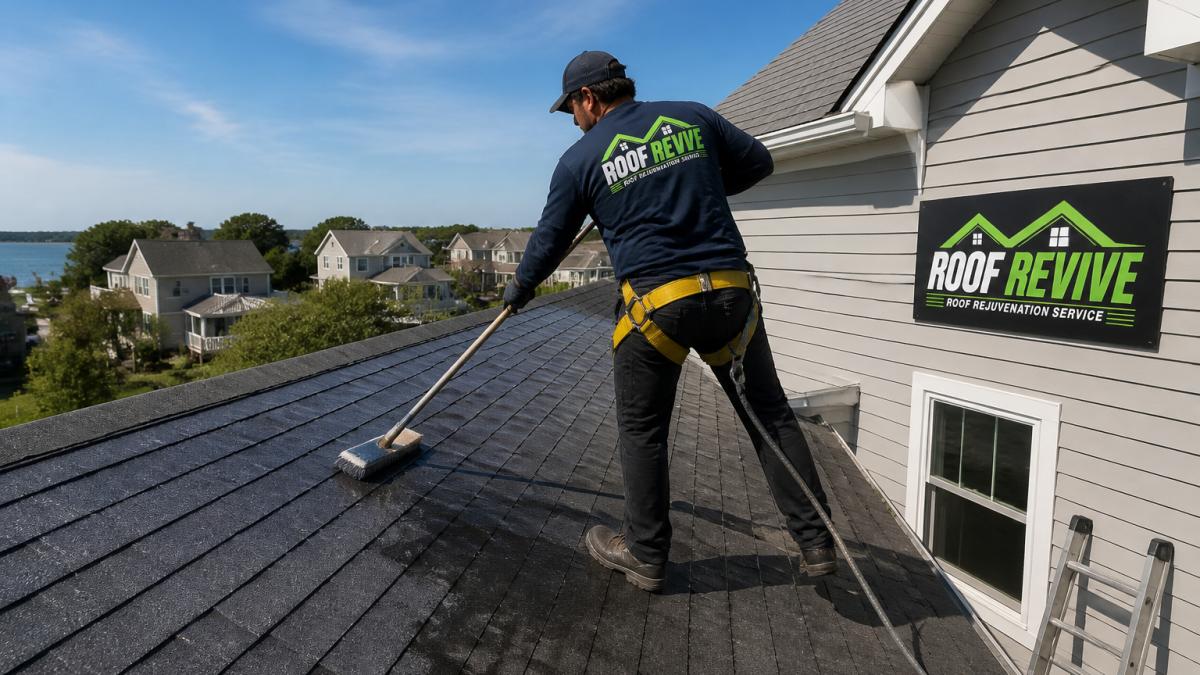
Not every roof qualifies. Age, granule loss, and surface condition all matter. That's why we start with an honest evaluation before recommending anything.
Can You Rejuvenate a 15-Year-Old Roof?
A 15-year-old roof can often be rejuvenated if the shingles are still structurally sound with granules left to seal. Many homeowners get quotes to replace a roof that doesn't need replacing yet.
The catch is condition, not age alone. A well-kept 15-year-old roof may qualify. A neglected one may not.
- Curling or missing shingles: usually a no
- Granule loss in patches: needs a closer look
- Solid, intact shingles: often a good candidate
Roof Treatment Reapplication: When and How Often
Plan on reapplying every 12 to 24 months for cleaning-based treatments, and far less often for a full rejuvenation. The right schedule follows your roof, not the calendar.
A simple seasonal inspection schedule
You do not need to climb up. Most of what you need to know is visible from the ground with binoculars, and a quick look after heavy rain tells you more than a dry-weather glance.
- Early spring: Check for new green tint on north-facing slopes and under tree canopy. Winter moisture plus early sun is when regrowth first shows.
- Late spring: Look for dark streaks running down from ridges and valleys. Those are algae, and they spread fastest once temperatures climb.
- Early fall: Clear leaves and debris from valleys, gutters, and behind chimneys. Trapped debris holds moisture and feeds growth through winter.
- Late fall: Note any thick moss patches before the first hard freeze. Treating before winter is easier than catching up in spring.
Signs it is time to retreat
| Signal | What It Means | Action |
|---|---|---|
| Light green tint | Early growth | Monitor monthly |
| Dark streaks | Algae spreading | Schedule treatment |
| Thick moss patches | Deep growth | Treat soon |
| Bare granules | Shingles wearing | Get an inspection |
| Growth returning within 6 months | Treatment underperformed or conditions are severe | Reassess shade, drainage, and tree cover before retreating |
Do not confuse slow results with a failed treatment
This is the most common misread. A treatment that is working can still show green for months while dead growth clings to the surface. Before you pay for a second application, confirm three things:
- Is the growth dead or alive? Dead moss turns brown, gray, or black and dries out. Live moss stays green and spongy.
- Has enough time passed? Most treatments need a full season, and shaded roofs can take longer.
- Has anything changed? New tree growth, a clogged gutter, or a shaded addition can shorten a treatment's life no matter how well it was applied.
If growth is dead but still attached, you need patience and rain, not another treatment. If growth is alive and spreading, that is your signal to retreat.
Match the schedule to the treatment
Cleaning-based treatments that rely on soft washing and a growth inhibitor typically need reapplication every 12 to 24 months. A full rejuvenation that restores shingle oils and seals granules is a different category and is measured in years, not months. Ask which type you are buying before you agree to a recurring schedule, because the two are not interchangeable.
Inspection, Safety, and Warranty Considerations
A good treatment comes with proof, and that proof matters for insurance and resale. Documented maintenance shows your roof is cared for, which helps when carriers question an aging roof.
Safety comes first. Stay off a wet or steep roof, and let a professional handle the work. Runoff from any treatment should be kept away from plants, gutters, and storm drains. If you'd rather not spend a weekend on a ladder, our Fall Special 20% OFF makes it a good time to book a professional treatment, and every visit includes free complimentary gutter cleaning.
Ask about the warranty before you buy. A transferable warranty adds value if you sell, and it protects you if the treatment underperforms.
Frequently Asked Questions
Does roof treatment really work?
Yes, when the roof qualifies. Roof treatments address organic growth like moss, mould, algae, and lichen, and rejuvenation treatments restore flexibility to aging asphalt shingles. Roof Revive uses lab-tested, plant-derived GreenSoy™ and independent PRI laboratory testing to confirm results. A free inspection determines whether your roof is a good candidate before any work begins.
What factors affect how long a roof treatment lasts?
The biggest factors are shade, nearby trees, roof type, surface condition, and local climate. A shaded roof under fir or maple trees stays damp longer and regrows faster. Sun exposure, moisture, and weather conditions also matter. Asphalt shingles in good condition hold treatments longer than worn or granule-depleted surfaces.
How can you tell when a roof treatment needs to be reapplied?
Watch for new moss, mould, algae, or lichen patches, especially on shaded slopes. Check gutters for granule buildup and look for dark streaks returning. A simple roof inspection twice a year, plus after major storms, catches regrowth early. If growth returns or shingles feel brittle, it's time to schedule a professional assessment and discuss roof treatment reapplication.
How does roof rejuvenation differ from roof cleaning?
Roof cleaning removes visible growth and debris, while asphalt shingle roof rejuvenation restores lost oils and seals granules to extend roof life. Cleaning is surface-level; rejuvenation targets the shingle itself. Many homeowners combine both. Roof Revive's GreenSoy™ treatment is a rejuvenation process, not just a cleaning, and includes before-and-after photo documentation.
Roof treatment timelines vary, but the decision doesn't have to be a guess. If you're facing a costly replacement quote on a roof that's still sound, get an honest assessment first. Roof Revive LLC offers a free inspection, a bio-based GreenSoy™ treatment, and a 6-year transferable warranty, all completed in a single day. Book your free inspection with Roof Revive LLC and find out how many years your roof has left.