Table of Contents
- Why Asphalt Roof Life Depends on Maintenance, Not Luck
- Asphalt Shingle Roof Maintenance: The Tasks That Actually Matter
- How Often to Inspect an Asphalt Roof (and What to Look For)
- Asphalt Shingle Roof Lifespan: What Really Shortens It
- Roof Rejuvenation for Asphalt Shingles: What the Evidence Shows
- Repair or Replace? How to Decide Before You Spend
- Conclusion: Small Maintenance Habits Extend Asphalt Roof Life
- Frequently Asked Questions
Last Updated: October 6, 2026
Why Asphalt Roof Life Depends on Maintenance, Not Luck
Most asphalt roofs don't die of old age. They die of neglect.
That's the core truth behind how to extend asphalt roof life, and it's the message we lead with at Roof Revive LLC. Shingles shed protective granules every day. Sun, rain, and salt air strip away the oils that keep them flexible. Left alone, that slow decline becomes curling, cracking, and leaks.
The good news: small, consistent care slows the clock. This guide covers the maintenance tasks that matter, how often to inspect, and how to tell when repair still makes sense.
Asphalt Roofing Manufacturers Association guidance on roof maintenance
Asphalt Shingle Roof Maintenance: The Tasks That Actually Matter
Asphalt shingle roof maintenance comes down to three jobs: keep water moving off the roof, keep penetrations sealed, and catch damage early.
Everything else is secondary. Here's what to do.
Clear Gutters, Downspouts, and Roof Debris
Clogged gutters cause more roof damage than most homeowners realize. When water backs up, it pools at the roof edge and works under shingles.
- Clear gutters and downspouts each spring and fall
- Remove leaves, twigs, and debris from valleys and behind chimneys
- Check that downspouts carry water away from the foundation
- Trim overhanging branches that drop debris and shade the roof
Shaded, debris-covered roof sections stay damp longer. That invites moss growth and algae growth, both of which shorten roof lifespan.
Protect Flashing, Sealant, and Roof Penetrations
Flashing is the metal that seals roof joints and penetrations. It's where most roof leaks start.
Check the flashing around chimneys, vents, skylights, and valleys. Look for lifted edges, rust, or cracked sealant. Re-seal small gaps before they become water intrusion points.
How Often to Inspect an Asphalt Roof (and What to Look For)
Inspect your asphalt roof twice a year, plus after any major storm. Spring and fall checks catch problems before they grow.
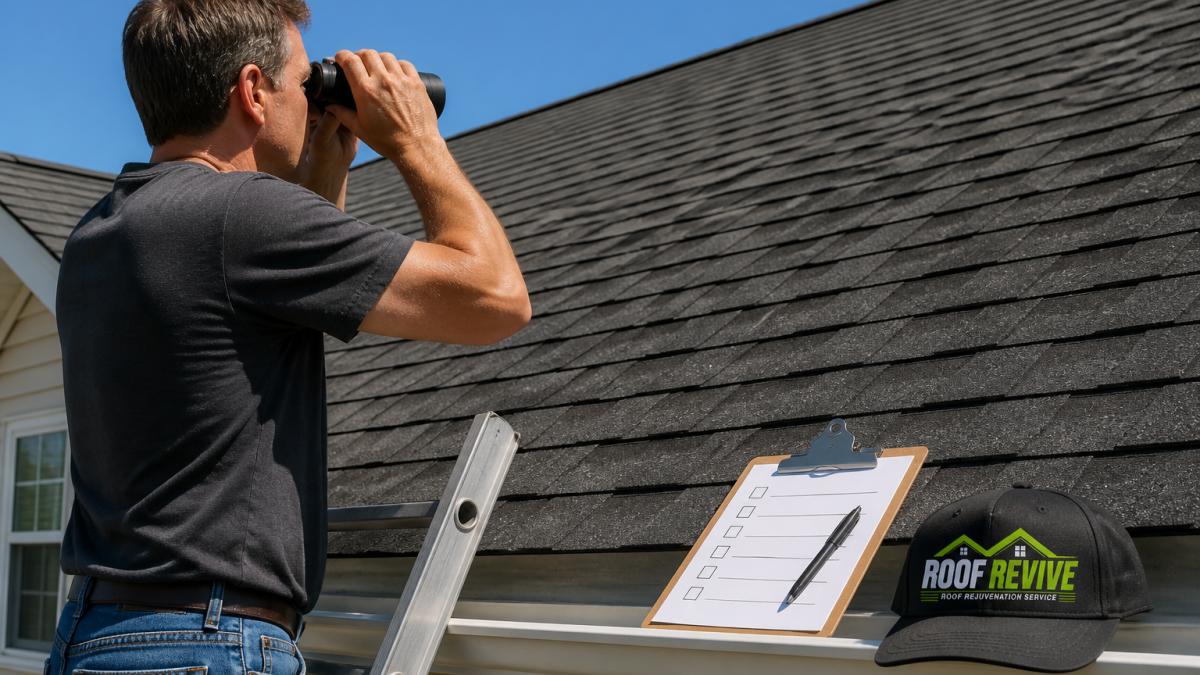
From the ground or a ladder, look for these warning signs:
- Granule loss: bald patches where shingle surface looks worn
- Curling or cracked shingles: edges lifting or splitting
- Missing shingles: gaps exposing the underlayment
- Loose shingles: shingles that lift in the wind
- Rust or damage at flashing: early leak risk
A Practical Inspection Schedule for Coastal and Mid-Atlantic Homes
Coastal homes face salt air, which speeds up shingle deterioration. That means more frequent checks.
| Task | Frequency | Best Time |
|---|---|---|
| Visual roof check from ground | Monthly | Year-round |
| Full inspection (ladder or pro) | Twice a year | Spring and fall |
| Storm damage check | After every major storm | Within days |
| Gutter and debris clearing | Twice a year | Late spring, late fall |
| Attic ventilation check | Once a year | Before summer |
Proper attic ventilation matters more than most people think. Trapped heat and moisture buildup cook shingles from below and shorten roof lifespan.
Asphalt Shingle Roof Lifespan: What Really Shortens It
Asphalt shingle roof lifespan depends on climate, shingle age, installation quality, and upkeep.
A well-maintained asphalt roof lasts longer than a neglected one of the same age. The factors that cut life short:
- UV exposure and sun damage: breaks down shingle oils
- Weather damage and storm damage: lifts and cracks shingles
- Poor ventilation: traps heat and moisture
- Debris and moss growth: holds moisture against the surface
- Skipped minor repairs: small issues become big ones
Shingle deterioration is gradual, but it accelerates fast once granules are gone. That's why catching it early pays off.
Roof Rejuvenation for Asphalt Shingles: What the Evidence Shows
Roof rejuvenation for asphalt shingles is a spray-applied treatment that aims to restore flexibility to dried-out shingles and slow granule loss. The concept is straightforward: asphalt shingles lose volatile oils over time, becoming brittle and prone to cracking. A bio-based treatment can penetrate the shingle surface and replenish some of that flexibility.
How the Treatment Works
Most rejuvenation products are plant-derived oils suspended in a carrier solution. When sprayed onto a clean, dry roof, the solution soaks into the shingle mat and surface. The oils help re-plasticize the asphalt binder, which can reduce curling and slow further granule shedding.
Lab testing, including independent PRI laboratory work, supports the concept that these treatments can improve shingle flexibility and reduce granule loss under controlled conditions. Field results depend heavily on roof condition at the time of application.
What Rejuvenation Can and Cannot Do
Can do:
- Restore flexibility to shingles that are dry but structurally sound
- Slow granule loss on roofs with moderate aging
- Extend the window before replacement on qualifying roofs
- Improve appearance on roofs with light staining or dullness
Cannot do:
- Repair missing, torn, or severely curled shingles
- Fix active leaks or water intrusion
- Restore shingles with significant granule loss (bald patches)
- Address rot, soft spots, or structural damage
- Reverse damage from hail, wind, or impact
Compatibility and Warranty Considerations
Not every roof qualifies. Most manufacturers and treatment providers require:
- Shingles that are structurally sound with no active leaks
- No more than moderate granule loss
- No missing or severely damaged shingles
- A roof age within a treatable range (typically under 20 years, though this varies)
Before applying any treatment, check whether it affects your manufacturer's warranty. Some shingle warranties may be voided by aftermarket coatings or treatments. Ask the treatment provider for documentation on compatibility and any warranty they offer.
What to Ask Before You Buy
- What independent testing backs the product's claims?
- Does the treatment void my existing shingle warranty?
- What warranty does the treatment itself carry, and is it transferable?
- What roof conditions disqualify a roof from treatment?
- Can you show documented results on similar roofs?
At Roof Revive LLC, we evaluate every roof before treatment. Our GreenSoy™ product is a USDA certified, plant-derived treatment with independent PRI laboratory testing. It is designed to add up to 18 years of roof life and carries a 6-year transferable warranty. We only treat roofs that qualify after a full evaluation, because a treatment on a failing roof helps no one.
USDA BioPreferred program on plant-based products
Repair or Replace? How to Decide Before You Spend
Repair makes sense when damage is isolated. Replacement makes sense when the roof is failing across large areas. But the decision is rarely that simple. Here is a practical framework.
The Decision Framework
Repair or rejuvenate if:
- Damage is limited to a few shingles or one section
- The roof is structurally sound with no soft spots or rot
- The roof is under 15 to 20 years old
- Leaks are rare and easy to trace
- Granule loss is moderate, not widespread
- You plan to stay in the home for several more years
Replace if:
- Shingles are missing across multiple areas
- The roof is sagging or has soft spots
- Leaks are recurring or hard to trace
- Granule loss is severe (bald patches across the roof)
- The roof is near or past its expected lifespan
- Repair costs would exceed a significant portion of replacement cost
Age Is Not the Only Factor
A 20-year-old roof that has been maintained may outperform a 12-year-old roof that has been neglected. Climate, ventilation, and installation quality all matter. Salt air accelerates deterioration, so coastal roofs may age faster than the same shingles inland.
When Maintenance Cannot Postpone Replacement
Preventive maintenance and rejuvenation can extend roof life, but they have limits. If your roof has:
- Active leaks that return after repair
- Widespread granule loss
- Curling or cracking across large sections
- Soft spots or visible sagging
- Rot at the deck or fascia
then replacement is the safer and more cost-effective path. Continuing to repair a failing roof can lead to interior damage, mold, and higher costs later.
Getting an Honest Evaluation
Many homeowners get quotes for full replacement when their roof still has years left. Others delay replacement when repair is no longer viable. A professional evaluation can confirm whether treatment, repair, or replacement is the right fit.
Ask the evaluator:
- What is the extent of the damage?
- Is the roof structurally sound?
- What are my options, and what does each cost?
- What happens if I do nothing?
At Roof Revive LLC, we use satellite measurements and drones to assess roofs without unnecessary climbing. We offer honest evaluations and only recommend treatment when a roof qualifies. If replacement is the better call, we will tell you.
Conclusion: Small Maintenance Habits Extend Asphalt Roof Life
Caring for an asphalt roof isn't complicated. Clear the gutters, seal the flashing, inspect twice a year, and fix small problems fast.
Salt air along the coast makes that care even more important. Coastal homes stand to gain tremendously from the rejuvenation treatment and hold off costly replacement.
If your roof is structurally sound but showing its age, don't assume replacement is the only path. Roof Revive LLC offers honest evaluations using satellite measurements and drones, a USDA certified GreenSoy™ treatment, and documented results backed by a 6-year transferable warranty. Book a free inspection and find out what your roof really needs.
Frequently Asked Questions
How can I extend the lifespan of my asphalt shingle roof?
Focus on four habits: inspect the roof at least twice a year, repair cracked or missing shingles promptly, keep gutters and downspouts clear, and address granule loss before shingles dry out completely. In coastal areas with salt air, these steps matter even more because salt accelerates shingle deterioration. Roof rejuvenation for asphalt shingles can also restore flexibility and seal granules on qualifying roofs, adding years of service before replacement becomes necessary.
How often should asphalt shingles be inspected?
Schedule a professional roof inspection once a year and after any major storm. Homeowners can do a visual check from the ground every few months, looking for curling, cracking, or missing shingles. If you live near the coast where salt air speeds up wear, twice-yearly inspections are worth the effort. Catching minor repairs early prevents water intrusion and extends asphalt roof life significantly.
Can roof rejuvenation extend the life of asphalt shingles?
Yes, for qualifying roofs. Roof rejuvenation for asphalt shingles uses a bio-based treatment that restores lost oils and reseals granules, which slows shingle deterioration. Lab-tested products can add up to 18 years of roof life when applied to roofs that still have structural integrity. The key is an honest assessment first. If shingles are too far gone, replacement is the better choice, which is why a professional evaluation matters before you commit.
What is the 25% rule in roofing?
The 25% rule generally means that if more than a quarter of your roof area shows damage, repair costs approach replacement costs, and a full replacement may be more economical. The exact threshold varies by insurer and contractor. Use it as a rough guide, not a hard rule. A professional inspection with documented photos gives you a clearer picture of whether targeted repairs or replacement makes more sense for your situation.