Table of Contents
- Understanding How Long Asphalt Shingles Last
- How Often to Inspect an Asphalt Roof
- Step-by-Step Asphalt Shingle Roof Maintenance
- Cleaning Moss from Asphalt Shingles
- Seasonal Care to Extend Roof Life
- Repair vs. Replacement: When to Act
- Professional Roof Rejuvenation as a Lifespan Solution
- Frequently Asked Questions
Last Updated: October 10, 2026
Understanding How Long Asphalt Shingles Last
Asphalt shingles are the most common roofing material in the United States. Most homeowners expect them to last 15 to 20 years before needing replacement.
In Delaware and the Mid-Atlantic region, salt air and coastal conditions accelerate shingle degradation. Without proper care, your roof may fail years earlier than expected.
Regular maintenance can add years to your roof's service life by catching problems early and addressing them consistently.
How Often to Inspect an Asphalt Roof
Inspect your asphalt roof at least twice per year, spring and fall, and immediately after severe weather, heavy winds, hail, or ice storms.
Safe Inspection Practices
Most roof damage can be assessed from the ground or ladder without stepping onto the roof. Walking on asphalt shingles can damage granules, crack shingles, and void warranties. Check your manufacturer's warranty before accessing the roof, as many explicitly prohibit homeowner foot traffic.
Ground-level inspection checklist:
- Use binoculars to examine shingles from the ground for missing pieces, curling edges, or bald spots (granule loss)
- Walk around your home's perimeter and look up at each roof section
- Check gutters and valleys from a ladder positioned safely on level ground
- Inspect flashing around vents, chimneys, and skylights from the ground or lower roof sections
When to use a ladder:
- Position the ladder on level, stable ground at least 3 feet from the roof edge
- Maintain three points of contact (two hands and one foot, or two feet and one hand) at all times
- Never lean sideways; reposition the ladder instead
- Inspect gutters, downspouts, and roof edges from the ladder, do not step onto the roof
- Use a stabilizer bar or have a second person hold the ladder
When not to inspect yourself:
- If your roof is steep (pitch greater than 6:12) or higher than one story
- After rain, snow, or ice
- During windy conditions or storms
- If you have mobility issues, fear of heights, or are over 65
- If you notice structural damage, sagging, or extensive granule loss
Professional Inspections
A professional inspection is more thorough and safer than a homeowner assessment. Licensed contractors use drone technology and hands-on evaluation to assess granule loss, shingle curling, flashing integrity, and structural issues.
Schedule professional inspections in spring and fall, or after major storms.
What professionals look for:
- Missing or cracked shingles
- Granule loss (bald spots on shingles or excessive granules in gutters)
- Curling or lifting shingle edges
- Moss, algae, or lichen growth
- Damaged or deteriorated flashing around vents, chimneys, and skylights
Step-by-Step Asphalt Shingle Roof Maintenance
Maintaining asphalt shingles involves three core tasks: clearing debris, managing water drainage, and controlling organic growth. These steps work together to extend asphalt shingle life and prevent premature failure.
Clear Roof Valleys and Remove Debris
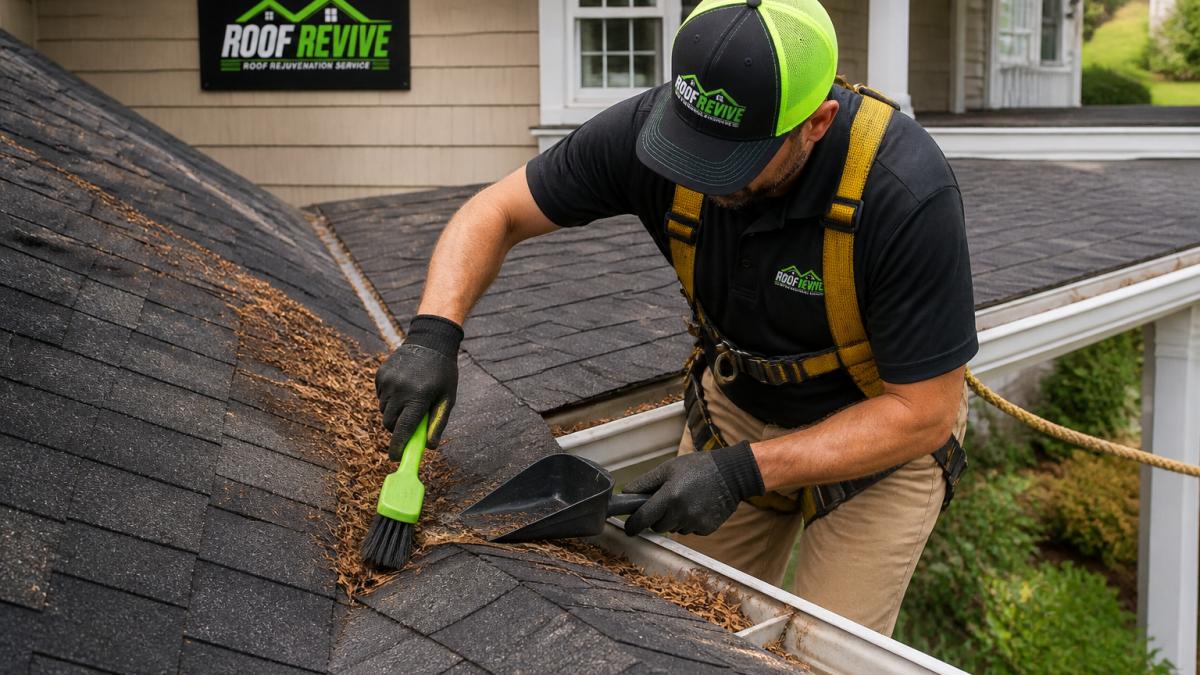
Roof valleys direct water flow. Leaves, branches, and debris block this flow, trapping moisture and accelerating rot and granule loss.
Clear valleys at least twice per year, after spring storms and before winter. Use a soft brush or plastic scoop to avoid damaging shingles.
Leaves, pine needles, twigs, shingle granules, moss, algae, and ice dams accumulate in valleys. Pay special attention to valleys near large trees, clearing them three to four times during autumn.
Clean Gutters and Downspouts
Clogged gutters prevent water from draining properly, causing leaks and rot. Clean gutters twice yearly at minimum, more often during heavy shedding seasons.
Gutter cleaning steps:
- Remove large debris by hand (leaves, sticks, dirt)
- Flush gutters with a hose to clear fine sediment
- Check downspout outlets to ensure water flows away from the foundation
- Look for sagging sections or separated joints
Downspouts should direct water at least 4-6 feet away from your home's foundation. Clogged gutters are one of the fastest ways to damage asphalt shingles, and prevention costs far less than repair. If gutter cleaning feels overwhelming, consider taking advantage of free complimentary gutter cleaning to keep your drainage system clear and your roof protected.
Trim Overhanging Trees
Overhanging branches create problems for your roof: shade encourages moss and algae growth, branches damage shingles during storms, and leaves accumulate on the roof and in gutters.
Trim branches back so they hang at least 6-10 feet from your roof edge. This reduces shade while preventing contact during wind and ice events.
Trimming reduces moss and algae growth, prevents branch damage, decreases leaf accumulation, and improves air circulation.
Cleaning Moss from Asphalt Shingles
Moss grows where moisture lingers and sunlight is limited, retaining water against shingles and accelerating granule loss. Coastal homes and shaded roofs are particularly vulnerable.
Remove moss before it becomes extensive. Light moss can be brushed away. Heavy growth requires chemical treatment or professional cleaning.
Safe moss removal methods:
- Soft brush: Use a soft-bristled brush to gently remove surface moss. Never use a wire brush or pressure washer.
- Zinc strips: Install zinc strips along the roof ridge. Rainwater dissolves zinc, which runs down shingles and inhibits moss growth.
- Copper-based fungicide: Apply fungicides designed for roof moss. Follow manufacturer instructions carefully to avoid damaging shingles.
- Professional cleaning: A licensed contractor can safely remove heavy moss without damaging shingles or the environment.
Prevention is easier than removal: keep gutters clean, trim trees, and ensure proper ventilation to dry shingles quickly and discourage moss.
Seasonal Care to Extend Roof Life
Spring: Inspect for winter damage, clean gutters, trim tree branches. Summer: Monitor for heat damage and UV degradation; ensure attic ventilation. Fall: Clear debris, trim trees, inspect flashing. Winter: Remove snow and ice dams; inspect after storms.
Repair vs. Replacement: When to Act
Small repairs extend your roof's life cost-effectively, but widespread damage requires replacement.
Repair your roof when:
- Fewer than 10-15 shingles are damaged
- Damage is isolated to one area
- The roof is less than 10 years old
- No signs of widespread granule loss
Consider replacement when:
- More than 25-30% of shingles show damage
- Granule loss is widespread across the roof
- The roof is over 15-18 years old
- Multiple leaks have developed
- Structural issues are visible (sagging, rot)
The decision depends on your long-term plans. At Roof Revive, we conduct honest roof evaluations by licensed professionals who use satellite measurements and drones to ensure we maximize all resources available to help homeowners get an accurate proposal, assessing whether your roof qualifies for rejuvenation treatment or truly needs replacement.
Professional Roof Rejuvenation as a Lifespan Solution
Roof rejuvenation is a treatment designed to restore flexibility and water-shedding properties to aging asphalt shingles. Over time, shingles lose the oils that keep them pliable, causing cracking, curling, and granule loss. Rejuvenation products aim to replace those lost oils and seal granules in place.
How Rejuvenation Works
Rejuvenation treatments are typically bio-based or petroleum-based liquids applied to the roof surface. The product penetrates the shingle matrix and restores flexibility to the asphalt binder. The process generally follows these steps:
- Professional assessment determines if your roof qualifies (typically roofs 10-18 years old with moderate granule loss but no structural damage)
- Roof is cleaned to remove debris, moss, and algae
- Treatment is applied according to manufacturer instructions
- Shingles are allowed to cure (usually 24-48 hours before rain exposure)
- Results are documented with before-and-after photography
The application typically takes one day and does not require roof removal or replacement.
Realistic Expectations and Limitations
Our GreenSoy™ bio-based treatment is lab-tested and adds up to 18 years of roof life. Results depend heavily on:
- Current roof condition: Roofs with extensive granule loss, multiple leaks, or structural damage are poor candidates. Rejuvenation works best on roofs showing early to moderate aging signs.
- Climate and weather exposure: Roofs in high-heat climates, coastal areas with salt air, or regions with freeze-thaw cycles may see shorter benefit periods than roofs in moderate climates. Coastal homes in Delaware and southern Pennsylvania stand to gain tremendously from rejuvenation treatment, which can help hold off costly replacement costs by several years.
- Maintenance after treatment: A rejuvenated roof still requires regular gutter cleaning, debris removal, and moss prevention. Neglect after treatment shortens the benefit.
- Product quality and application: Not all rejuvenation products are equivalent. Application technique and coverage consistency affect outcomes.
Our professional team focuses on honest assessments, ensuring that customers only receive treatment when their roof truly qualifies. Rejuvenation is not a substitute for replacement when structural damage is present.
Warranty Considerations
Before pursuing rejuvenation, review your shingle manufacturer's warranty. Some manufacturers void or limit warranty coverage if rejuvenation products are applied to their shingles. Others explicitly permit rejuvenation under certain conditions. Contact your shingle manufacturer or consult the original warranty documentation to confirm whether rejuvenation is permitted without affecting coverage.
If your roof is still under manufacturer warranty, applying an unapproved treatment could eliminate your coverage for defects. This is a critical step many homeowners overlook.
When Rejuvenation Makes Sense
Rejuvenation is most cost-effective when:
- Your roof is 10-16 years old and showing early signs of aging (minor granule loss, slight curling)
- You plan to stay in your home for at least 5-7 more years
- The roof has no active leaks or structural damage
- Gutter cleaning, debris removal, and tree trimming are current
- Your manufacturer's warranty permits rejuvenation
When Rejuvenation Is Not Appropriate
Rejuvenation will not solve these problems and should not be pursued:
- Roofs with active leaks or water damage inside the home
- Widespread missing shingles or large damaged areas
- Sagging roof sections or visible structural issues
- Roofs over 18-20 years old with heavy granule loss across most of the surface
- Roofs with rot, mold, or deteriorated decking
In these cases, repair or replacement is the appropriate solution.
Frequently Asked Questions
How can I tell if my asphalt roof needs repair or replacement?
Look for signs of significant wear: missing or cracked shingles, granule loss (visible in gutters), curling or buckling shingles, and active leaks inside your home. If your roof is under 15 years old and damage is localized to a few areas, repair is often sufficient. Roofs over 20 years old with widespread deterioration typically warrant replacement. A professional inspection using satellite measurements and drone analysis can provide a definitive assessment and help you avoid unnecessary replacement costs.
How often should I inspect my asphalt roof?
Inspect your asphalt roof at least twice yearly: once in spring after winter weather and once in fall before storm season. After severe weather events (heavy winds, hail, or ice), conduct an immediate inspection. Annual professional inspections are recommended for roofs over 10 years old. Licensed professionals can identify early signs of damage, granule loss, and organic growth that affect shingle flexibility and lifespan, helping you address problems before they worsen.
Can roof rejuvenation treatments actually extend the life of my asphalt shingles?
Yes, bio-based rejuvenation treatments restore lost oils to asphalt shingles and seal granules, restoring flexibility and preventing further deterioration. Laboratory-tested treatments can extend roof life by up to 18 years when applied to roofs that still have structural integrity. These treatments work best on roofs showing early signs of aging (granule loss, reduced flexibility) rather than on severely damaged roofs. Results are documented with before-and-after testing, and professional treatments often include transferable warranties for added peace of mind.
What role do moss and algae play in shortening asphalt shingle life?
Moss and algae trap moisture against shingles, accelerating granule loss and reducing shingle flexibility. This organic growth thrives in shaded, humid areas and can cause premature deterioration if left unchecked. Regular cleaning and preventive measures, such as trimming overhanging branches to increase sunlight and improve airflow, slow the growth of moss and algae. Professional cleaning removes existing growth safely without damaging shingles, and proper maintenance extends the time between cleanings.