
Table of Contents
- Why Granule Loss Happens and What It Means for Your Roof
- What Granule Loss Looks Like on a Roof
- How Much Granule Loss Is Too Much
- New Roof Granule Shedding: What's Normal in the First Year
- Step-by-Step: How to Inspect Your Roof from the Ground
- How to Fix Granule Loss on Shingles
- How to Stop Granule Loss: Prevention That Works
- Conclusion
- Frequently Asked Questions
Last Updated: October 14, 2026
Why Granule Loss Happens and What It Means for Your Roof
Granule loss is the shedding of the protective mineral layer from asphalt shingles, the clearest early signal that a roof is aging.
When granules wash away, the asphalt underneath dries out and cracks, and leaks begin.
This guide explains how to stop granule loss before it shortens your roof's life, and when treatment beats replacement.
What Protective Granules Do for Asphalt Shingles
Protective granules are crushed minerals pressed into the asphalt coating during manufacturing. They block ultraviolet rays that break down the asphalt, and add fire resistance and grip underfoot. Strip them away and the shingle has no shield: the asphalt dries, shrinks, and cracks, and once the substrate is exposed, water gets in and damage speeds up fast.
Common Causes of Premature Granule Loss
Premature wear rarely has one cause, usually a mix of weather, age, and poor ventilation.
- Hail impact knocks granules loose in a single storm
- Wind damage scours granules from edges and ridges
- Sun exposure and heat dry out the asphalt over years
Salt air along the coast speeds all of this up. That is why coastal homes stand to gain tremendously from the rejuvenation treatment and hold off costly replacement costs.
What Granule Loss Looks Like on a Roof
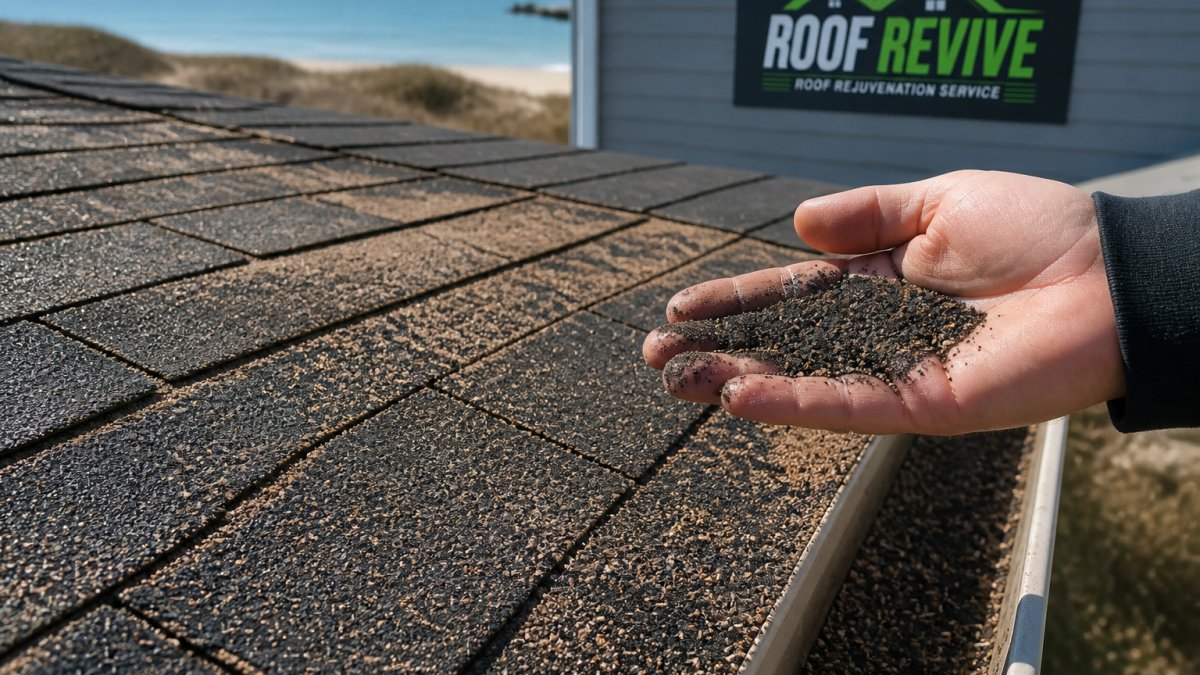
Granule loss is easy to spot once you know the signs: the shingle surface turns patchy and dull instead of uniform.
Look for bare spots where the dark asphalt coating shows through, smooth and black, not grainy. You may also see:
- Bald patches near ridges, valleys, and edges
- A gritty, sand-like buildup in gutters and downspouts
- Dark streaks or staining on the shingle surface
Piles of grit in your gutters after every rain are granule accumulation worth a closer look.
How Much Granule Loss Is Too Much
How much granule loss is too much depends on the pattern, not just the amount. A little grit in the gutters is normal; bare spots across many shingles are not. Heavy loss in one area points to damage, while even loss across the whole roof usually points to age and weathering.
Normal Shedding vs. Abnormal Loss
Normal shedding is slow and spread out, a thin layer of grit in the gutters each season, with the shingle surface still mostly intact.
Abnormal loss is fast and patchy. Watch for:
- Large bare spots with exposed substrate
- Granules collecting heavily after one storm
- Loss concentrated on one side or slope
If you see abnormal loss, the roof needs a professional look before the next storm season.
New Roof Granule Shedding: What's Normal in the First Year
New roof granule shedding is normal. Fresh shingles lose loose granules in the first months as the surface settles, extra material working free from manufacturing, not a defect. Most washes off within the first year. Steady shedding past year one points to weathering, oil depletion, or an installation problem.
Step-by-Step: How to Inspect Your Roof from the Ground
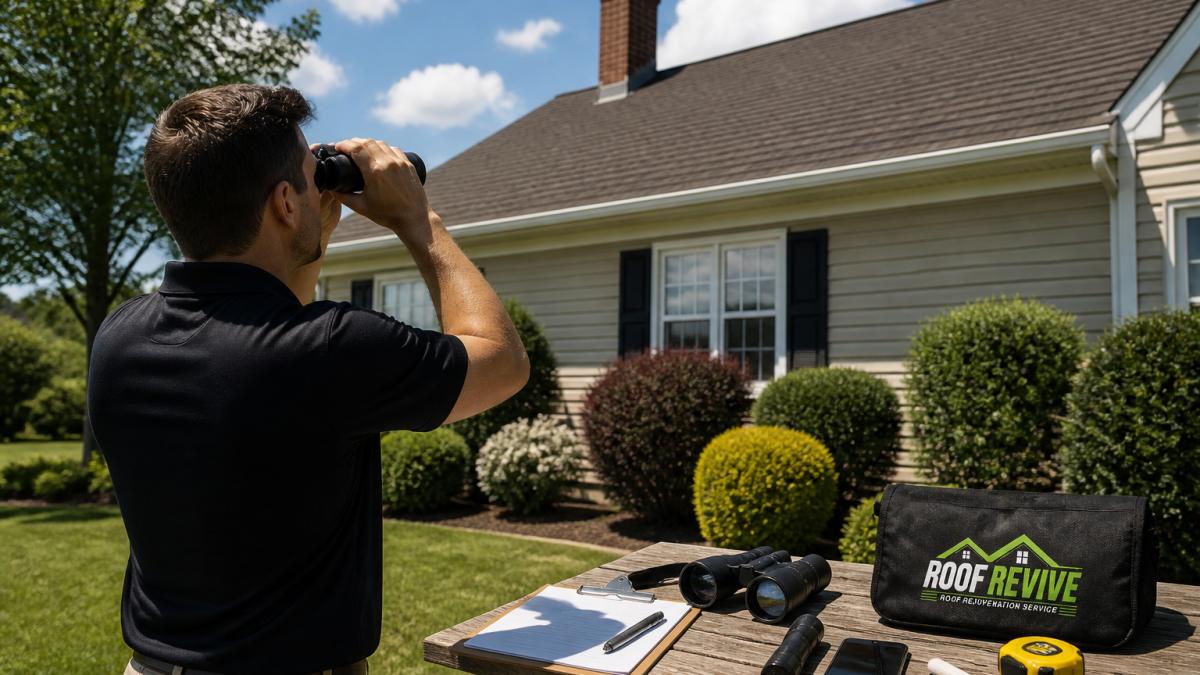
You can inspect your roof safely from the ground with binoculars, a ladder-free gutter check, and an attic walk-through.
Here is the process we recommend:
- Stand back at least 20 feet and scan the full roof with binoculars, one slope at a time, left to right.
- Check the gutters for grit. Rub a handful of downspout debris between your fingers, sand-like grit is granule accumulation; leaves and twigs are just debris.
- Look at downspout splash pads for sandy buildup. A visible fan of grit after a rain is a strong signal.
- Scan for bare spots where dark asphalt shows through. If one slope is noticeably patchier, that points to damage rather than age.
- Check ridges, valleys, and edges for the heaviest wear, these areas take the most wind and foot traffic.
- Photograph anything patchy or exposed, and date the photo.
The Attic Check Most Homeowners Skip
From the attic, you can spot what the exterior view hides:
- Daylight through the roof deck means water has a path in.
- Dark water stains or streaks on rafters and sheathing point to active or past leaks.
- Soft or crumbly decking when pressed gently means moisture has been sitting.
Do this on a bright day so daylight penetration is obvious.
Reading the Gutter Evidence
Gutters are your best low-effort diagnostic. A thin, even dusting of grit each season is normal. What matters is the pattern:
- Heavy grit after a single storm, likely hail or wind damage.
- Grit concentrated under one slope, localized damage, not age.
- Grit in every gutter, every season, year after year, normal weathering.
A Simple Decision Tree: Normal vs. Abnormal
Use these four questions to sort ordinary shedding from a real problem:
- How old is the roof? Under one year, light shedding is expected. Past 15 years, any loss is worth a professional look.
- Is the loss even or patchy? Even loss across the whole roof usually means age. Patchy loss in one area means damage.
- Was there recent weather? Hail, high wind, or a major storm within the last 60 days shifts the odds toward damage.
- How much is in the gutters? A dusting is normal. A visible pile after one rain is not.
If you answer "patchy," "recent storm," or "visible pile," get a professional assessment before the next storm season.
Documenting What You Find
If you suspect storm damage, take dated photos of:
- The bare spots themselves, with something for scale (a coin or ruler works).
- The gutter contents before you clean them out.
- The downspout splash area.
Keep the photos in one folder with the date and a note about the weather that preceded the loss. Most carriers want evidence of when and how damage occurred, and a dated record beats a memory.
Inspect twice a year and after any major storm. Catching granule loss early is the whole game.
How to Fix Granule Loss on Shingles
How to fix granule loss on shingles depends on how far the damage has gone. Loose granules cannot be glued back on one by one, you can only slow further loss, restore what is left, or replace what is too far gone.
What Homeowners Can Do Themselves
These steps are safe and worth doing regardless of roof age:
- Clean gutters at least twice a year so water does not back up under shingle edges.
- Trim tree limbs back so debris and shade do not trap moisture on the roof surface.
- Clear roof valleys of leaves and needles with a roof rake from the ground, never climb up to do it.
These habits slow wear. They do not restore a shingle that has already lost its coating.
What Homeowners Cannot Fix
A few things look like DIY jobs but are not:
- Reapplying granules. There is no product that re-adheres loose granules to a worn shingle. Anything marketed that way is a temporary coating at best.
- Patching bare spots with roofing cement. A roofer may seal a small isolated edge with cement, but this offers temporary protection only, it does not restore the shingle, and a bad patch can trap moisture and make things worse.
- Walking a steep or aging roof. The fall risk is not worth it, and foot traffic grinds off more granules.
The Real Fix for Aging Shingles
The underlying problem with most granule loss is oil depletion, the asphalt has dried out and can no longer hold the mineral surface. A bio-based rejuvenation treatment soaks into the shingle, re-binds loose granules, and restores flexibility to brittle asphalt. It works best on roofs that still have most of their granules and no exposed substrate.
Repair vs. Replacement: How to Decide
Use these criteria to sort your options:
| Situation | Likely Best Path |
|---|---|
| Light, even loss; roof under 10 years old | Maintenance and monitoring |
| Moderate loss; roof 10-15 years old; no leaks | Rejuvenation treatment |
| Heavy loss on one slope; recent storm | Professional repair of affected area |
| Widespread bare spots; roof over 20 years old | Replacement evaluation |
| Recurring leaks or soft decking | Replacement |
A licensed professional can confirm which category your roof falls into. Ask for documented findings and photos so you can compare estimates fairly.
Documenting for Insurance
If you suspect hail or wind damage, documentation matters. Granule loss alone rarely establishes a covered claim, carriers want evidence of a specific weather event and resulting damage. Collect:
- Dated photos of bare spots, with a scale object in frame.
- Photos of gutter contents before cleaning.
- Photos of dents or bruises on vents, gutters, and downspouts.
A dated record beats a memory and helps if you later sell the home.
At Roof Revive LLC, we use satellite measurements and drones to evaluate a roof before we ever recommend treatment. Our GreenSoy™ process is lab-tested and backed by a 6-year transferable warranty. We only treat roofs that truly qualify, because an honest assessment matters more than a quick sale.
How to Stop Granule Loss: Prevention That Works
Prevention works best when you match the fix to the cause. A roof losing granules to debris needs different care than one drying out from sun and age.
Start with these habits:
- Clean gutters twice a year to stop water backup
- Trim nearby trees so debris and shade do not trap moisture
- Check attic ventilation to reduce heat buildup
- Avoid foot traffic on the roof when you can
For roofs already showing oil depletion, a rejuvenation treatment restores flexibility and helps prevent further granule loss, often extending roof life by years at a fraction of replacement cost.
When to Call a Roofing Professional
A licensed professional can assess roof condition and tell you whether repair, restoration, or replacement is right.
At Roof Revive LLC, we use satellite measurements and drones to evaluate a roof before we ever recommend treatment.
That documentation also helps with insurance, many carriers want proof of maintenance, and a dated report with before-and-after photos provides it.
Conclusion
Granule loss will not fix itself, and waiting only raises the odds of a costly replacement. The good news: most roofs showing early loss still have years of life left.
If your roof is losing granules, get an honest evaluation before you spend on a full replacement. Roof Revive LLC restores lost oils and seals granules with our USDA-certified GreenSoy™ treatment, adding up to 18 years of roof life in a single day.
Frequently Asked Questions
How much granule loss is too much for shingles?
A few loose granules in gutters after a storm is normal. It becomes a problem when you see bare spots, exposed asphalt, or large piles of granules collecting in gutters and downspouts. If shingle edges look thin or you can see the dark substrate beneath, granule loss has progressed past normal shedding. A licensed professional can assess whether your roof still qualifies for restoration or needs replacement.
How do you fix granule loss on shingles?
You cannot glue granules back onto a shingle. What you can do is address the cause: trim overhanging tree branches, clean gutters so water drains freely, and avoid walking on the roof unnecessarily. For roofs with early-stage granule loss, a professional bio-based rejuvenation treatment restores lost oils and helps reseal remaining granules. Roofing cement can patch small damaged areas, but it is a temporary fix, not a long-term solution.
Does insurance cover granule loss?
Insurance typically covers granule loss only when it results from a specific event like hail or wind damage, not from normal aging. If a storm caused the damage, document everything with dated photos and keep samples of granule debris. A professional inspection report can support your claim. For age-related granule loss, carriers may instead require documented maintenance to maintain coverage.
Can granule loss be stopped once it starts?
Early-stage granule loss can be slowed or largely stopped. The key is acting before the asphalt coating is exposed. Once granules are gone and the substrate is visible, that area cannot be restored. A bio-based treatment applied by a licensed professional can restore flexibility and reseal granules on qualifying roofs, adding years of service life when the roof is still structurally sound.