Table of Contents
- What Roof Rejuvenation Actually Does to Asphalt Shingles
- Does Roof Rejuvenation Really Work?
- Roof Rejuvenation vs Roof Replacement: A Side-by-Side Comparison
- Can You Rejuvenate a 15 Year Old Roof?
- How Long Does Roof Rejuvenation Last?
- Warranty, Insurance, and Resale Implications
- When Roof Rejuvenation Is Not Worth It
- Frequently Asked Questions
Last Updated: October 21, 2026
What Roof Rejuvenation Actually Does to Asphalt Shingles
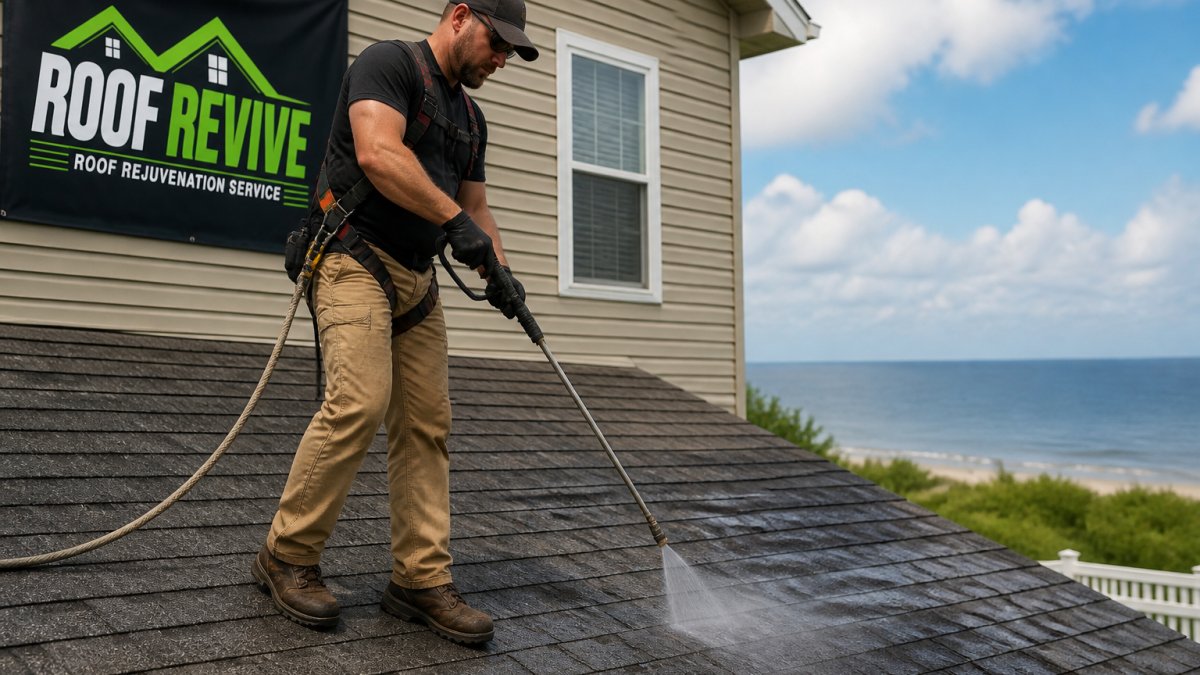
Roof rejuvenation is a spray-applied treatment that restores flexibility to aging asphalt shingles by replenishing the oils that weather and sun exposure strip away over time.
The mechanism matters more than the marketing. Asphalt shingles are a blend of asphalt, mineral filler, and granules pressed onto a fiberglass mat. The asphalt gives the shingle its flexibility.
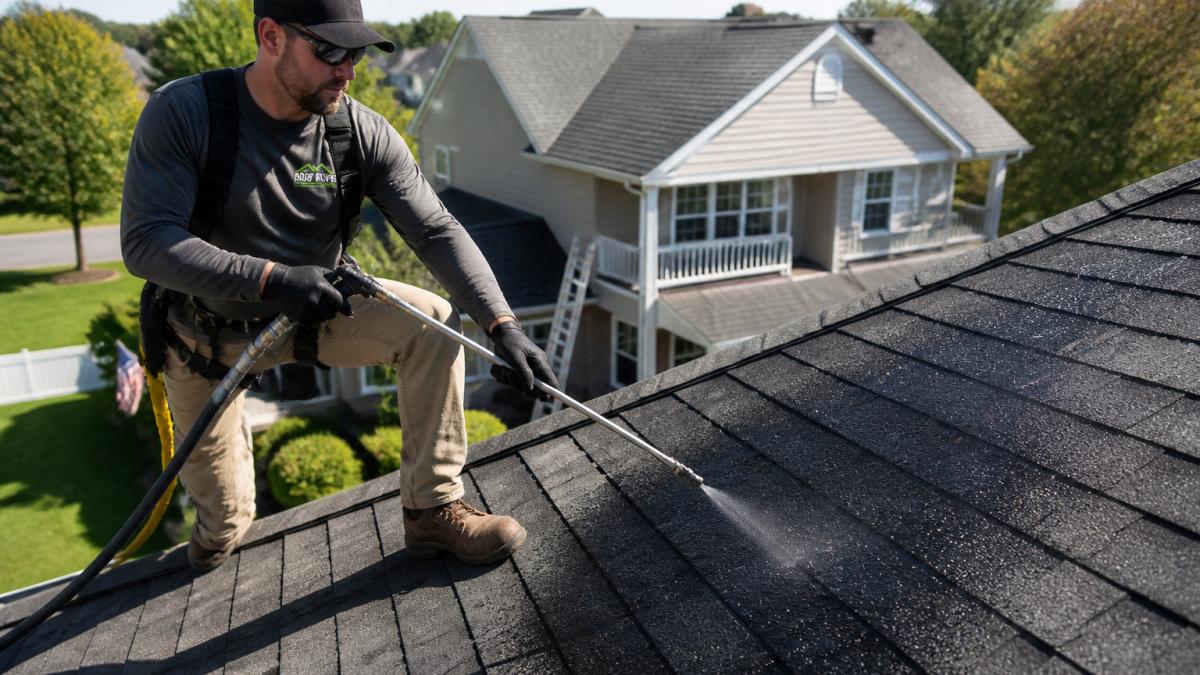
A rejuvenation treatment addresses the cause rather than the symptom. The spray penetrates the shingle, restores lost oils, and re-adheres granules that would otherwise wash into gutters.
Does Roof Rejuvenation Really Work?
Yes, with a caveat that most sales pages skip: it works on shingles that are aging but structurally sound, and it does nothing for shingles that have already failed. That distinction is the whole ballgame.
The treatment is supported by independent laboratory testing, including PRI testing on the GreenSoy™ formulation we use. Lab results show restored flexibility and improved granule adhesion, which are the two failure modes that drive premature replacement. What lab testing cannot tell you is whether your specific roof qualifies.
We tell homeowners the same thing every time: a roof with active leaks, soft decking, or widespread mat exposure needs repair or replacement, not a spray treatment.
Roof Rejuvenation vs Roof Replacement: A Side-by-Side Comparison
The two options solve different problems at very different price points. Replacement removes and rebuilds the entire roof system. Rejuvenation treats the existing shingles and buys time. The comparison only becomes useful, though, when you put real line items and a time horizon next to each other instead of comparing two round numbers.
What Each Option Actually Includes
A replacement quote is not one price. It bundles tear-off and disposal of the old shingles, new underlayment, ice-and-water shield at the eaves and valleys, new flashing at penetrations and chimneys, ridge and starter shingles, and the labor to install all of it. A quote that looks low usually leaves something out of that list, and the missing item is often flashing or underlayment, which is where leaks start.
A rejuvenation quote covers surface preparation, masking of siding, windows, and landscaping, the spray application itself, and cleanup. It does not include repairs to flashing, pipe boots, or decking, and any treatment provider who bundles those into a single line item without inspecting them first is guessing.
Itemized Cost Comparison
Because pricing varies by roof size, pitch, access, and region, the honest way to compare is by line item and by annualized cost rather than by a single headline number. Use the table below as a framework and fill in local quotes.
| Line Item | Rejuvenation | Replacement |
|---|---|---|
| Tear-off and disposal | Not included | Included, priced by square and dumpster count |
| Underlayment and ice-and-water shield | Not included | Included |
| Flashing, boots, and penetrations | Priced separately if needed | Included |
| Surface prep and masking | Included | Not applicable |
| Treatment or shingle material | Included | Included, priced per square |
| Labor | Single crew, single day | Multi-day crew |
| Permits | Usually not required | Often required by local code |
| Warranty paperwork | Included | Included |
Break-Even Math Over a Defined Horizon
The break-even question is not "which costs less today." It is "which costs less per year of service life." Run the math over a ten-year horizon, because that is long enough to capture a replacement cycle and short enough to reason about.
- Get a written replacement quote for your roof as it stands.
- Get a written rejuvenation quote plus any repair items the inspection flagged.
- Estimate the years of service life the treatment is expected to add, using the conservative end of the range rather than the best case.
- Divide each total cost by the years of service it buys.
If a treatment plus the repairs it requires costs a small share of a replacement and reliably adds several years, the annualized cost of treating now and replacing later is lower than replacing early.
A second scenario matters just as much: if the roof is already near the end of its service life, the treatment cost gets spread over very few added years, and the annualized math flips against you.
Pros and Cons of Each Option
Rejuvenation pros: lower upfront cost, one-day completion, no tear-off debris or landfill load, documented maintenance records, and a transferable warranty. Rejuvenation cons: it is a delay tactic, not a permanent fix, it only works on qualifying roofs, and it does not address failed flashing or decking.
Replacement pros: a brand-new roof system with a fresh manufacturer warranty and no near-term maintenance concerns. Replacement cons: high cost, days of disruption, permit requirements, and the risk of paying for a full replacement on a roof that had years of service left.
Asphalt Roofing Manufacturers Association guidance on shingle performance
Can You Rejuvenate a 15 Year Old Roof?
Often, yes. A 15-year-old asphalt shingle roof is frequently in the sweet spot for treatment, because the shingles have lost oils and started shedding granules but the mat has not yet failed. Whether yours qualifies depends on condition, not age alone.
Our inspection looks at granule coverage, shingle flexibility, and signs of water intrusion. We use satellite measurements and drone imaging to get an accurate picture of the roof without guesswork, then give you a straight answer.
Coastal homes stand to gain tremendously from the rejuvenation treatment and hold off costly replacement costs.
How Long Does Roof Rejuvenation Last?
This is the question where marketing language and field reality diverge most, so it is worth separating what is measured from what is claimed.
What the Lab Measures
Laboratory testing on rejuvenation formulations typically measures two things: the flexibility of the asphalt after treatment, and how well granules stay adhered to the shingle surface. Both are tested by comparing treated and untreated samples under accelerated weathering, where heat, ultraviolet light, and moisture are cycled faster than they occur outdoors.
What lab testing cannot tell you is how many years that translates to on your roof. Accelerated weathering compresses time using assumptions about sun exposure, temperature swings, and ventilation that rarely match a specific house. A roof under a shaded tree canopy ages differently from one in full afternoon sun, and a well-ventilated attic deck runs cooler than a poorly ventilated one.
What Field Observation Suggests
Field results are more variable and less precise than lab results. Practitioners generally report that treated roofs in good starting condition hold their flexibility and granule coverage longer than untreated roofs of the same age, but the observed range is wide and depends heavily on climate, roof pitch, attic ventilation, and how much granule loss had already occurred before treatment.
A realistic way to think about it: the treatment buys time proportional to how much service life the shingles had left. A roof treated early, while the mat is intact and most granules are still present, has more to gain than a roof treated after years of visible wear.
What Shortens the Result
- Coastal salt air. Salt accelerates the oxidation that hardens asphalt, which is why coastal homes stand to gain the most from early treatment and also why they need it sooner.
- Poor attic ventilation. Trapped heat bakes the shingle from below and undoes flexibility gains faster.
- Heavy granule loss before treatment. If the mat is already exposed in large areas, there is less surface for the treatment to protect.
- Deferred repairs. A treated roof with a leaking pipe boot or failed flashing still takes on water, and water damage outpaces any flexibility benefit.
- Foot traffic and debris. Repeated walking on the roof and accumulated debris hold moisture against the shingles.
How to Judge a Lifespan Claim
Ask three questions of any provider, including us: What is the measured basis for the number, lab or field? What starting condition does the number assume? And what does the warranty actually cover if the roof fails earlier than claimed? A warranty is the number a company will stand behind contractually, and it is usually shorter than the marketing figure for exactly that reason. We back our work with a 6-year transferable warranty, which transfers to a new owner if you sell the home.
FEMA guidance on roof maintenance and wind resilience
Warranty, Insurance, and Resale Implications
Documentation is where rejuvenation quietly outperforms a lot of homeowners' expectations. Insurance carriers increasingly ask for proof that an aging roof is being maintained, and a dated treatment record with before-and-after photos answers that question directly.
If your carrier has flagged the roof's age, a documented maintenance file can support a conversation about renewal. It is not a guarantee of coverage, and it does not override an underwriter's judgment, but it is evidence you otherwise would not have.
On resale, a transferable warranty and a maintenance record give a buyer something concrete. A roof that has been treated and documented reads differently than a roof that has simply aged.
When Roof Rejuvenation Is Not Worth It
Skip the treatment if the roof has active leaks, soft spots in the decking, widespread exposed mat, or storm damage that requires repair. In those cases the money is better spent on the repair you actually need.
It is also not worth it if you are planning to replace the roof within a year or two anyway.
The honest version of this answer is the one we give at the inspection: we would rather tell you the roof does not qualify than take your money for a treatment that will not hold.
Insurance Institute for Business & Home Safety research on roofing
Frequently Asked Questions
How do you know if an asphalt shingle roof needs replacement instead of rejuvenation?
A qualified roofer checks for structural failure: sagging decking, widespread shingle cracking, active leaks, or granule loss so severe the shingle mat is exposed. If the roof has soft spots or multiple leak points, replacement is the only safe option. Rejuvenation only makes sense when the shingle mat is intact and the damage is limited to dryness and surface granule loss. Roof Revive performs honest evaluations and will decline treatment on roofs that do not qualify.
What is the difference between roof restoration and rejuvenation?
Rejuvenation is a spray treatment that restores oils to dried-out asphalt shingles and reseals granules, extending the life of the existing roof. Restoration typically involves more extensive work such as replacing damaged shingles, sealing seams, and applying a coating system. Rejuvenation is the lighter, single-day option for roofs in sound structural condition. If your roof has missing shingles or active leaks, restoration or replacement is the better fit.
Will roof rejuvenation help with insurance non-renewal due to roof age?
Documented maintenance can help. Roof Revive provides before-and-after photo documentation and a 6-year transferable warranty, which gives homeowners proof of proactive maintenance to present to carriers. Insurance requirements vary by company, so confirm what your carrier accepts before scheduling. The documentation is not a guarantee of coverage renewal, but it demonstrates the roof has been maintained rather than neglected.
What are the pros and cons of roof rejuvenation?
Pros: it costs a fraction of replacement, completes in a single day, extends roof life by up to 18 years, restores shingle flexibility, and provides documented maintenance for insurance. Cons: it only works on roofs that qualify structurally, it does not fix active leaks or missing shingles, and it is not a permanent solution. Homeowners should weigh the lower upfront cost against the fact that replacement will eventually be needed.
If you are staring down a five-figure replacement quote on a roof that still has life left in it, the decision comes down to condition, not age. Roof Revive LLC inspects every roof before recommending treatment, uses satellite and drone measurements for an accurate proposal, and backs qualifying work with a 6-year transferable warranty and full before-and-after documentation. Book a free inspection and get a straight answer on whether your roof qualifies.