Table of Contents
- Why Roof Maintenance Matters for Insurance Coverage
- What Homeowners Insurance Covers for Roof Damage
- Creating a Roof Maintenance Checklist That Insurers Expect
- Conducting and Documenting a Roof Inspection Report for Insurance
- How to Document Roof Damage for Insurance Claims
- Understanding the Roof Insurance Claim Process
- Building Your Roof Maintenance Record for Long-Term Coverage
- Frequently Asked Questions
Last Updated: October 14, 2026
Why Roof Maintenance Matters for Insurance Coverage
Your roof is one of your home's most valuable assets. When insurers evaluate your coverage, they're asking a simple question: Is this roof being cared for?
At Roof Revive, we've seen firsthand how maintenance records protect homeowners. Insurance companies don't just look at age (How Your Roof Influences Your Home and Business Insurance). They look at what you've done to keep your roof in good condition. A well-maintained 15-year-old roof can keep your coverage active. A neglected 10-year-old roof might trigger a non-renewal letter.
Here's what matters most to insurers:
- Regular inspections showing you catch problems early
- Documentation of repairs and maintenance work
- Proof that you're preventing small issues from becoming big ones
- Clear records of what you've done and when you did it
The reason is straightforward. Insurers want to avoid claims from preventable damage. If you document your roof maintenance for insurance compliance, you're showing them you're a lower-risk customer. That's the language they understand.
Many homeowners assume a roof just needs to survive until it's time to replace it. That's the wrong approach. Your roof maintenance for insurance compliance is actually an investment in keeping your coverage active and your costs down.
What Homeowners Insurance Covers for Roof Damage
Standard homeowners insurance covers sudden, accidental damage to your roof. This includes wind, hail, storms, and falling trees. It does NOT cover wear and tear or neglect.
Here's what's typically covered:
- Wind damage from severe storms
- Hail damage from hailstorms
- Damage from falling branches or trees
- Water damage from a sudden leak caused by covered perils
- Ice dam damage (in some policies)
What's NOT covered:
- Normal aging and weathering
- Gradual leaks from poor maintenance
- Damage from lack of repairs
- Damage from deferred maintenance
- Damage from improper installation
The key word is "sudden." If a storm tears off shingles, that's covered. If your roof slowly deteriorates because you never inspected it, that's not.
Insurance companies use your roof maintenance for insurance compliance as proof that you're preventing gradual damage. When you document regular inspections and repairs, you're building a case that any damage you claim is truly accidental, not the result of neglect.
This is why documentation matters so much. Without records, an insurer can argue that damage resulted from poor maintenance. With records, you have proof that you did your part.
Creating a Roof Maintenance Checklist That Insurers Expect
Your roof maintenance for insurance compliance needs a system. Insurers expect to see evidence that you're checking your roof on a schedule, not randomly.
Here's a practical checklist to use twice per year (spring and fall):
Visual Inspection from the Ground
- Look for missing or curling shingles
- Check for visible granule loss (bald spots)
- Scan for sagging areas or dips in the roofline
- Look for algae or moss growth
- Check gutters for excessive granule buildup
- Verify that flashing around vents and chimneys looks intact
- Look for signs of water stains on soffit or fascia
After Storms
- Walk the perimeter and look for visible damage
- Check for loose or missing shingles
- Look for dents in gutters or vents
- Photograph any damage immediately
- Document the date and weather conditions
Interior Checks
- Inspect attic for water stains or leaks
- Look for signs of moisture or mold
- Check for daylight coming through the roof
- Note any soft spots in ceiling drywall
Record What You Find
- Date of inspection
- Weather conditions
- What you observed (good condition, minor wear, specific issues)
- Any repairs made or scheduled
- Photos of the roof condition
When you document this consistently, you create a maintenance history that insurers recognize. This record becomes your proof that roof maintenance for insurance compliance is part of your regular home care routine. As part of your seasonal maintenance, consider scheduling a free complimentary gutter cleaning to ensure proper drainage and prevent water damage, clean gutters are essential to your overall roof protection strategy.
Conducting and Documenting a Roof Inspection Report for Insurance
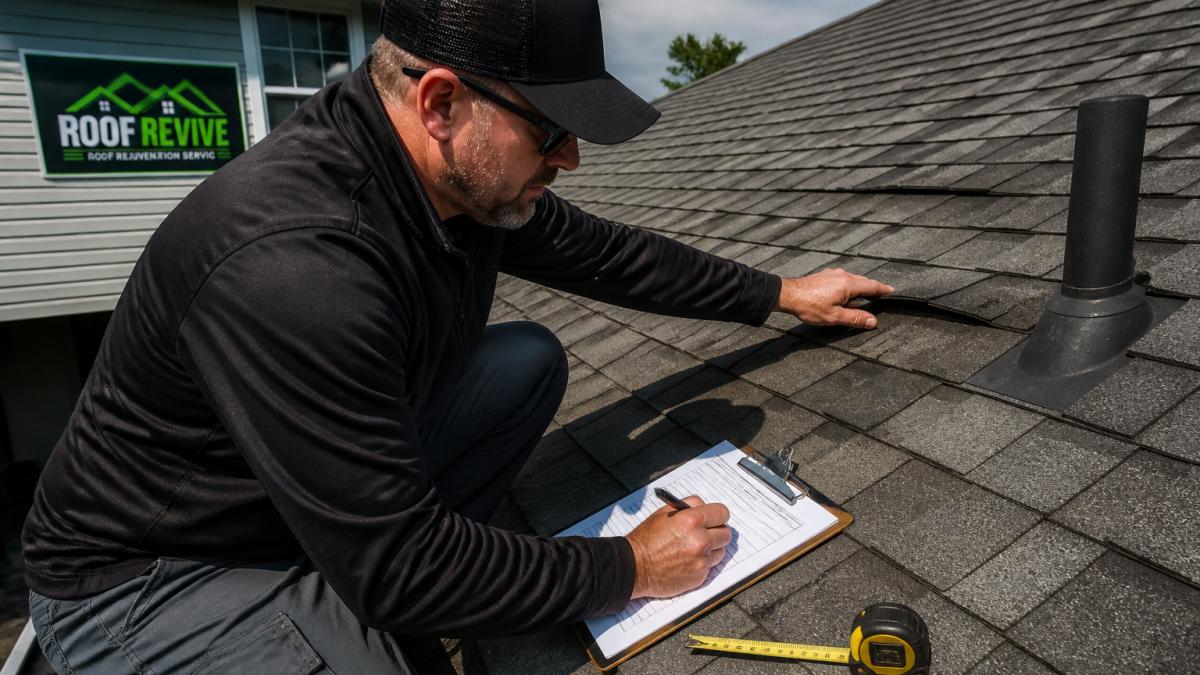
A proper roof inspection report for insurance is more than a casual look. It's a detailed record that shows you've done a thorough assessment.
What to Include in Your Inspection Report
Start with the basics. Record the date, time of day, and weather conditions. Note the roof's age (if you know it) and the material type (asphalt shingles, wood, etc.).
Then document what you see:
- Overall condition (good, fair, poor)
- Specific areas of concern with locations
- Shingle condition (intact, curling, bald spots, missing)
- Flashing condition around vents, chimneys, skylights
- Gutter condition and drainage
- Signs of leaks or water damage
- Moss, algae, or debris accumulation
- Any repairs needed
When to Call a Professional
If you're uncomfortable on a ladder or if your roof is steep, hire a licensed roofing professional. Many insurers actually prefer professional roof inspection reports for insurance claims. A professional brings:
- Experience identifying problems you might miss
- Detailed written documentation
- Photos and measurements
- A report that carries weight with insurers
At Roof Revive, we conduct honest roof evaluations using satellite measurements and drones to ensure accurate assessments. This level of documentation is exactly what insurers want to see.
Creating a Digital Record
Store your inspection reports in one place. Use a folder on your computer or cloud storage. Include:
- Written inspection notes
- Photographs from multiple angles
- Date and weather conditions
- Any repair receipts or contractor reports
- Before-and-after photos if repairs were made
This organized record becomes invaluable when you need to file a claim or renew your insurance.
How to Document Roof Damage for Insurance Claims
When storm damage occurs, documentation is everything. Insurers will send an adjuster to assess the damage, but your photos and records matter just as much.
Photograph Immediately (If Safe)
Take photos within 24 hours of discovering damage. Photograph:
- The damaged area from multiple angles
- Close-ups of missing or torn shingles
- Damage to flashing or vents
- Any debris on the roof or ground
- The overall roof condition
- Interior damage (water stains, leaks)
Include something in the photo for scale (a coin, your hand, a ruler). This helps the adjuster understand the extent of damage.
Document the Date and Conditions
Write down:
- Exact date you discovered the damage
- Date and time of the storm (if applicable)
- Weather conditions (wind speed if you know it, hail size, etc.)
- Any witnesses who saw the damage
- How the damage was discovered
File Your Claim Promptly
Contact your insurance company as soon as possible. Provide:
- Photos of the damage
- Your inspection report showing pre-damage condition
- Documentation of the weather event
- Any repair estimates from contractors
- Your maintenance records
The maintenance history you've been keeping becomes crucial here. It shows the adjuster that this damage is new, not the result of neglect. If you have documentation of regular roof maintenance for insurance compliance, you're in a much stronger position.
Understanding the Roof Insurance Claim Process
The insurance claim process has clear steps. Understanding them helps you prepare and document effectively.
Step 1: Report the Damage
Call your insurance company as soon as you discover damage. Provide basic information: what happened, when it happened, and what damage you see.
Step 2: The Adjuster Inspection
An insurance adjuster will visit your home to assess the damage. They'll examine the roof, take photos, and write a report.
Be present during the inspection. Answer questions honestly. Point out the specific damage. If you have photos from the storm or immediately after, show them.
Step 3: Adjuster's Report and Estimate
The adjuster will determine what's covered and provide a repair estimate. This estimate becomes the basis for your claim payout.
Step 4: Claim Decision
Your insurer will approve or deny the claim based on the adjuster's report.
Step 5: Repairs and Follow-Up
Once approved, you can proceed with repairs. Keep all receipts and documentation. Some insurers require a follow-up inspection after repairs are complete.
Your roof maintenance for insurance compliance makes this entire process smoother.
Building Your Roof Maintenance Record for Long-Term Coverage
A maintenance record is your insurance policy's best friend. It's the document that keeps your coverage active and your claims approved.
What to Keep in Your Record
Your roof maintenance record should include:
- Dates of all inspections (professional or personal)
- Detailed notes from each inspection
- Photos from each inspection
- Receipts for any repairs or maintenance work
- Contractor reports from professional work
- Documentation of storm damage or incidents
- Insurance company correspondence about roof condition
- Any letters or notices from your insurer
How to Organize It
Create a simple system:
- Use a three-ring binder or digital folder
- Label sections by year
- Keep documents in chronological order
- Include a summary page listing all entries
- Back up digital files to cloud storage
Why This Matters Long-Term
Insurance carriers review roof condition at renewal time. If you're approaching the age where some insurers become cautious (typically 15-20 years for asphalt shingles), your maintenance record becomes critical.
When you apply for new insurance, this record helps new carriers understand that your roof is well-maintained. It gives them confidence in covering your home.
Many homeowners don't realize that roof maintenance for insurance compliance isn't just about current coverage. It's about maintaining insurable value over time.
The difference between a roof that keeps your insurance active and one that triggers non-renewal often comes down to documentation.
Roof Revive helps homeowners understand their roof's true condition through professional evaluation and honest assessment.
Start with a simple inspection schedule. Document what you find. Keep your records organized. These steps cost nothing but can save thousands in claim disputes or non-renewals.
Frequently Asked Questions
How often should a roof be inspected for insurance purposes?
Most insurers recommend annual roof inspections, with additional inspections after major storms or severe weather events. A documented inspection history strengthens your claim and demonstrates compliance with your policy terms. Spring and fall are ideal times for routine inspections to catch damage before it worsens. Keep records of every inspection, including photos and any contractor reports, to show your insurer you maintain your roof responsibly.
What conditions will cause a roof inspection to fail for insurance?
Insurers typically flag roofs with missing or damaged shingles, visible leaks, sagging sections, deteriorated flashing, or excessive wear and tear. Roof age also matters, many carriers have strict limits on coverage for roofs beyond 20-25 years old. Moss, algae growth, or standing water can signal drainage problems. Lack of maintenance records is a major red flag. Regular documentation and prompt repairs prevent these failures and keep your coverage active.
Does homeowners insurance cover routine roof maintenance?
No. Standard homeowners insurance covers sudden, accidental damage from covered perils like wind, hail, or storms, but excludes routine maintenance such as cleaning gutters, replacing damaged flashing, or treating moss growth. You are responsible for preventive upkeep. However, by maintaining your roof properly and documenting that maintenance, you protect your coverage eligibility and strengthen your position if you need to file a claim for storm damage.
What should homeowners document after a roof inspection?
Take dated photographs of the roof condition from multiple angles, including close-ups of any damage, wear, or repairs. Keep written notes describing the roof's age, material type, and any issues found. Save contractor inspection reports with their professional assessment. Store gutter cleaning receipts and repair invoices. Organize all records by date in a folder or digital file. This documentation proves you maintain your roof and provides evidence if you file a claim, making the insurance adjuster's job easier and your claim more likely to be approved.