Table of Contents
- Roof Rejuvenation Versus Roof Replacement: Which Costs Less?
- Understanding Roof Rejuvenation Cost
- What Determines Your Roof Replacement Estimate
- How Long Does Roof Rejuvenation Last?
- When to Replace an Asphalt Shingle Roof Instead
- The Real Financial Case for Rejuvenation
- Making Your Decision: Rejuvenation or Replacement
- Conclusion
- Frequently Asked Questions
Last Updated: October 8, 2026
Roof Rejuvenation Versus Roof Replacement: Which Costs Less?
When your roof inspector flags concerns about aging shingles, you face a critical decision: rejuvenate or replace? At Roof Revive LLC, we work with homeowners who've received replacement quotes ranging from $10,000 to $30,000 for roofs that still have structural integrity. Many assume replacement is inevitable. It isn't.
The choice between roof rejuvenation versus replacement cost comes down to one question: how much life remains in your roof? A structurally sound asphalt shingle roof that's lost flexibility and granule protection can be restored. A roof with widespread damage, leaks, or structural failure cannot. Understanding the cost difference between these two paths, and what determines which path makes sense for your home, is essential before you commit tens of thousands of dollars.
This guide breaks down the real costs, timelines, and decision points so you can make an informed choice based on your roof's actual condition, not a contractor's sales pitch.
Understanding Roof Rejuvenation Cost
Roof rejuvenation restores lost oils to asphalt shingles, returning flexibility and preventing further granule loss. The process uses a bio-based treatment applied to your existing roof, extending its functional life without tearing off and rebuilding.
The cost of roof rejuvenation depends on roof size, pitch, and accessibility. Unlike replacement, which requires demolition, new materials, and labor over multiple days, rejuvenation is completed in a single day. This speed translates directly to lower labor costs and less disruption to your home.
What makes rejuvenation attractive isn't just the upfront cost, it's what you're paying for. You're preserving a roof that still has structural integrity while buying additional years of protection. Homeowners often describe the decision as the difference between maintaining an asset versus abandoning it prematurely.
The rejuvenation process is backed by independent laboratory testing. Results are documented with before-and-after photos, providing proof of treatment for insurance carriers, a detail that matters significantly if your insurer has flagged your roof's age.
What Determines Your Roof Replacement Estimate
A replacement estimate reflects five primary cost drivers: roof size, pitch, material choice, structural damage, and local labor rates.
Roof size is measured in squares, a roofing term for 100 square feet. A typical single-story home has 15-25 squares. Each square of asphalt shingles, underlayment, and labor adds to the total. Steeper pitches increase labor difficulty and safety requirements, raising costs further.
Material selection matters significantly. Basic asphalt shingles cost less than architectural or premium shingles. Some homeowners upgrade to impact-resistant shingles, especially in coastal areas where weather exposure is severe. Structural repairs, replacing rotted decking, reframing damaged trusses, or addressing ventilation issues, can double the final bill if discovered during installation.
Location and seasonal demand affect labor rates. Work done during peak season (spring and summer) typically costs more than off-season projects.
Creating Your Replacement Estimate Checklist
Before accepting a replacement estimate, verify these details:
- Roof size in squares, confirm the contractor measured, not estimated
- Pitch and complexity, steeper roofs and multiple levels increase labor
- Existing structural condition, ask what repairs are included or excluded
- Material specifications, which shingle grade, color, and warranty
- Underlayment and ventilation, modern codes require specific products
- Permit and inspection fees, often $500-$1,500, sometimes included in quotes
- Warranty terms, material warranty versus workmanship warranty and duration
- Debris removal and cleanup, confirm whether this is included
- Timeline and weather contingencies, how delays are handled
A complete estimate should itemize labor, materials, permits, and contingencies separately. If a quote is vague or bundled without breakdown, request clarification before signing.
How Long Does Roof Rejuvenation Last?
Roof rejuvenation extends roof life by adding flexibility and sealing granules. The treatment can add up to 18 years of functional life to a structurally sound asphalt shingle roof.
Duration depends on the roof's condition at treatment and environmental exposure. A roof that's 8-10 years old typically benefits from the full treatment window. A roof that's already 15 years old may see 6-10 additional years, depending on how much deterioration has occurred.
Coastal environments and areas with intense UV exposure accelerate shingle aging. The salt air and sun exposure that characterize coastal homes make rejuvenation particularly valuable, it addresses the exact problems that coastal conditions create: loss of oils and accelerated granule erosion.
The rejuvenation treatment comes with a 6-year transferable warranty, providing documented proof that maintenance has been performed. This matters for insurance carriers who've flagged aging roofs. Having documented treatment often satisfies renewal requirements that might otherwise result in non-renewal or rate increases.
When to Replace an Asphalt Shingle Roof Instead
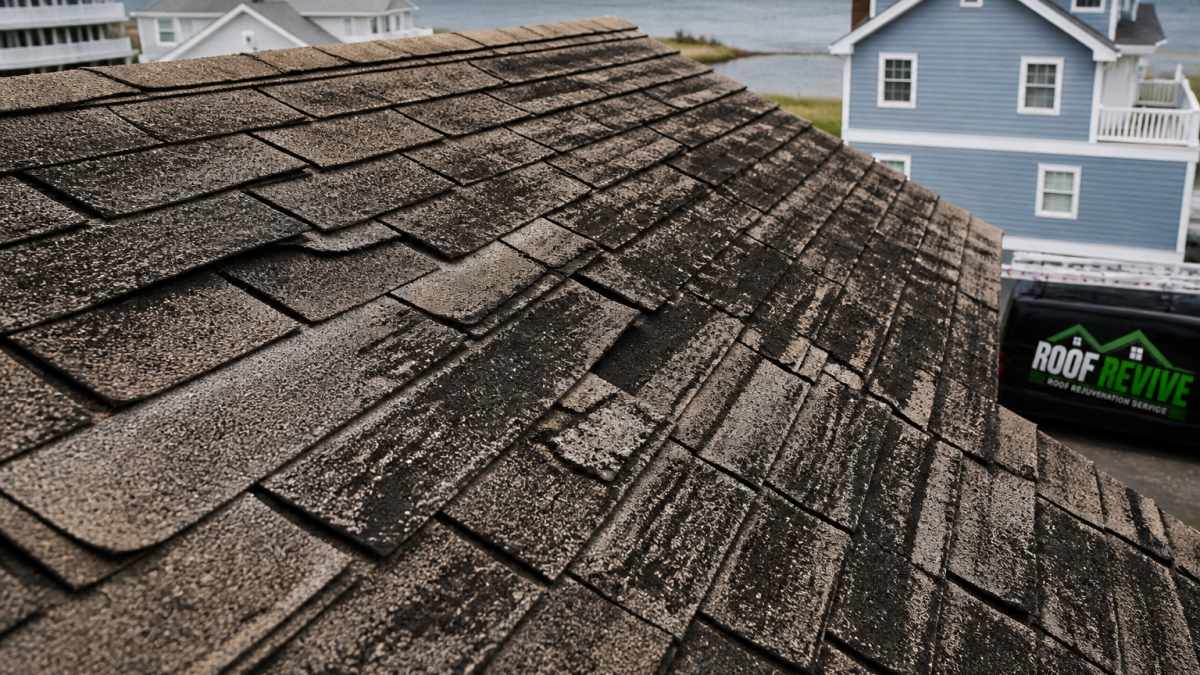
Replacement becomes necessary when structural damage is present or when the roof has already reached the end of its serviceable life.
Replace your roof if you observe these conditions:
- Active leaks, water penetration indicates the protective barrier has failed
- Widespread curling or buckling, structural distortion means shingles are no longer sealing properly
- Exposed decking or rafters, missing shingles that expose the structure beneath
- Sagging sections, indicates structural failure, often from water damage or inadequate support
- Mold or algae growth on decking, suggests moisture penetration and potential rot
- Granule loss covering more than 30% of the roof, indicates advanced deterioration
If your roof is already 20+ years old, replacement is typically more appropriate than rejuvenation.
Structural damage discovered during inspection, rotted decking, compromised trusses, or inadequate ventilation, requires replacement, not rejuvenation. Treating a structurally compromised roof extends neither its life nor its safety.
Insurance non-renewal often triggers replacement decisions. If your insurer has issued a non-renewal notice specifically citing roof age, rejuvenation may not satisfy their requirements. However, documented treatment sometimes provides the proof of maintenance needed to restore coverage or prevent rate increases.
The Real Financial Case for Rejuvenation
The financial argument for roof rejuvenation versus replacement cost is straightforward: rejuvenation costs a fraction of replacement while extending the roof's life significantly.
If replacement costs $15,000-$25,000 and rejuvenation costs substantially less, the math is clear. You're investing in maintenance rather than replacement. Even if you eventually replace the roof, you've delayed that major expense by 10+ years.
Consider the timeline: a roof treated today might not require replacement for 15 years. In that time, you've avoided one major capital expense. For homeowners with tight budgets, rental property managers optimizing cash flow, or anyone facing insurance non-renewal, rejuvenation transforms a crisis into manageable maintenance.
The documented proof of treatment also has financial value. Insurance carriers recognize rejuvenation as evidence of roof maintenance. This documentation often prevents non-renewal or rate increases, a savings that may exceed the treatment cost itself.
Making Your Decision: Rejuvenation or Replacement
The decision between roof rejuvenation versus replacement cost requires honest assessment of your roof's condition and your financial situation.
Choose rejuvenation if:
- Your roof is structurally sound with no active leaks
- Granule loss and reduced flexibility are the primary concerns
- Your roof is 8-15 years old
- You need to satisfy insurance requirements for roof maintenance
- You want to delay major capital expense
- You're planning to stay in your home for another 10+ years
Choose replacement if:
- Your roof has active leaks or structural damage
- Your roof is 20+ years old
- Widespread curling, sagging, or missing shingles are present
- Your insurance carrier requires replacement as a condition of renewal
- You plan to stay in your home for 20+ years and want a single solution
- Structural repairs are needed beneath the roof
The honest assessment requires professional evaluation. At Roof Revive LLC, we conduct evaluations using satellite imagery and drone inspection to determine whether a roof qualifies for rejuvenation or requires replacement. Our goal is honest assessment, some roofs genuinely need replacement, and we say so.
A professional evaluation costs nothing and provides clarity. You'll know exactly what your roof's condition is, what your options are, and what each option costs. That information transforms the decision from guesswork into strategy.
Conclusion
Facing a roof decision shouldn't mean choosing between expensive replacement and hoping your roof holds together. The choice between roof rejuvenation versus replacement cost depends on your roof's actual condition, not its age. A structurally sound roof that's lost flexibility and granule protection can be restored, often for a fraction of replacement cost. Roof Revive LLC provides professional evaluation, science-backed GreenSoy™ treatment, and documented results with a 6-year transferable warranty. The treatment restores flexibility, prevents further granule loss, and extends your roof's life by up to 18 years. Book a free inspection to learn exactly what your roof needs and what each option costs.
Frequently Asked Questions
How much does roof rejuvenation cost compared with roof replacement?
Roof rejuvenation costs significantly less than full replacement. Replacement for asphalt shingle roofs typically ranges from $10,000 to $30,000 or more depending on roof size, complexity, and materials. Rejuvenation addresses the same aging problem, lost oils and granule deterioration, at a fraction of that cost. The exact pricing for rejuvenation depends on your roof's square footage and condition, so contact Roof Revive for a free inspection and quote tailored to your situation.
How long can roof rejuvenation extend a roof's life?
Professional roof rejuvenation using science-backed treatments like GreenSoy™ can extend your roof's life by up to 18 years when applied to structurally sound asphalt shingle roofs. The actual lifespan extension depends on your roof's current age, exposure to weather elements like salt air in coastal areas, and maintenance afterward. Roof Revive backs this with a 6-year transferable warranty, giving you documented proof of the treatment's effectiveness.
Is roof rejuvenation worth it for an aging asphalt shingle roof?
Rejuvenation makes financial sense if your roof is structurally sound but showing age, granule loss, lost flexibility, or insurance concerns, but doesn't have active leaks or severe damage. It restores lost oils and seals granules, addressing the core cause of aging without the disruption or expense of replacement. For homeowners facing insurance non-renewal due to roof age, rejuvenation provides documented maintenance records that satisfy carriers. If your roof has structural damage or active leaks, replacement becomes the necessary choice.
When should you replace a roof instead of rejuvenating it?
Replace your roof when it has active leaks, missing or severely damaged shingles, sagging decking, mold growth, or structural issues. If rejuvenation won't address these problems, replacement is your only option. A professional roof evaluation using satellite measurements and drone inspection identifies whether your roof qualifies for rejuvenation or needs replacement. Roof Revive's honest assessments ensure you only receive treatment when your roof truly qualifies, avoiding unnecessary costs in either direction.