Table of Contents
- What Roof Rejuvenation Does to Aging Asphalt Shingles
- What Roof Replacement Involves
- Roof Rejuvenation vs Roof Replacement: Key Differences
- Signs a Shingle Roof Needs Replacement
- Roof Rejuvenation Inspection Checklist
- How Long Does Roof Rejuvenation Last?
- Roof Rejuvenation Warranty and Documentation
- Conclusion
- Frequently Asked Questions
Last Updated: October 19, 2026
What Roof Rejuvenation Does to Aging Asphalt Shingles
Roof rejuvenation is a spray-applied treatment that restores flexibility to aging asphalt shingles by replenishing the oils that weather and sun exposure strip away over time. At Roof Revive LLC, we apply a bio-based GreenSoy™ treatment that soaks into dried-out shingles, seals loose granules, and slows the brittleness that leads to cracking.
The core problem is simple. Asphalt shingles start life flexible. Years of ultraviolet light and temperature swings pull the oils out of the asphalt layer, and once that happens the shingle can no longer expand and contract without splitting. Granule loss follows, and bare spots appear. Rejuvenation targets that specific failure mode rather than covering it up.
How the GreenSoy Treatment Works
The product is a plant-derived, USDA-certified conditioning agent, and independent PRI laboratory testing backs how it performs. A specialist operator applies it in a single day, with no tear-off, no dumpster, and no days of noise overhead. Full before-and-after photo documentation comes with every job, which matters more than most homeowners realize. That record is proof of maintenance you can hand to an insurer.
What Roof Replacement Involves
Roof replacement means removing the existing shingles, inspecting and often repairing the roof decking, installing new underlayment, and nailing down a fresh layer of asphalt shingles. It is a full-system rebuild, and it's the right call when the roof has moved past what surface treatment can address.
A typical replacement runs several days, depending on roof size, pitch, and weather. Crews strip the old material, check for soft spots in the decking, replace any rotten sections, roll out new underlayment, and then install the new shingle field. Flashing around chimneys, vents, and valleys gets redone at the same time.
Tear-Off, Decking, and Underlayment
The tear-off is where hidden costs live. Once the old shingles come up, damaged decking and failed underlayment become visible, and both add to the bill. That's not a contractor trick, it's the nature of the work. You cannot assess the deck until you can see it.
Replacement resets the clock completely. You get a new roof lifespan, a new manufacturer warranty, and no lingering questions about what's underneath. The trade-off is disruption and expense, and for a structurally sound roof, that expense is often avoidable.
Roof Rejuvenation vs Roof Replacement: Key Differences
The two paths solve different problems. Rejuvenation extends the service life of a roof that is worn but structurally intact. Replacement rebuilds a roof that has failed or is close to failing. Choosing between them comes down to shingle condition, not shingle age alone.
| Factor | Roof Rejuvenation | Roof Replacement |
|---|---|---|
| What it fixes | Dry, brittle shingles and granule loss | Failed roof system, damaged decking |
| Time on site | One day | Several days |
| Tear-off required | No | Yes |
| Resets roof lifespan | No, extends existing life | Yes, full reset |
| Best for | Structurally sound roofs with wear | Leaks, rot, storm damage, end of life |
| Documentation | Before-and-after photos, warranty | Manufacturer warranty on new materials |
A common mistake is treating age as the deciding factor. A twelve-year-old roof in good condition and a twelve-year-old roof with failing flashing are not the same problem. Condition drives the decision.
A Condition-Based Decision Framework
Most homeowners want a straight answer, so here is the framework we actually use. Score the roof on four questions, and the path usually becomes obvious.
- Is there active water intrusion? Any leak, ceiling stain, or damp decking means replacement or a targeted repair first. Conditioning is off the table until the source is fixed.
- Is the decking sound? Soft, spongy, or sagging areas point to deck or framing problems that surface treatment cannot address.
- How much granule loss is there? Scattered granule loss with shingle mat still covered is a conditioning candidate. Bare mat across large areas is not.
- How flexible are the shingles? Shingles that still bend without cracking at the hip and ridge have structure left to condition. Shingles that snap or crumble are past the window.
If the answers are no leaks, sound decking, moderate granule loss, and flexible shingles, rejuvenation is worth pricing. If any answer flips, replacement moves to the front. A roof that fails one question but passes the other three may still be a candidate after the specific defect, a failed flashing detail, for example, is repaired.
The Long-Term Cost View
Upfront price is the wrong comparison. The right one is total cost over the years you plan to own the home, and that math favors conditioning more often than homeowners expect.
A replacement resets the clock but carries the full cost of tear-off, decking repair, underlayment, new shingles, and disposal in one hit.
Financing changes the picture too. A replacement is often financed over a term, which spreads the cost but adds interest. A single-day treatment is usually paid outright, so there is no financing cost to weigh.
Signs a Shingle Roof Needs Replacement
Replacement is the answer when the roof shows structural failure, not just surface wear. Watch for these signals:
- Active leaks inside the home, especially after storms
- Curling, clawing, or missing shingles across large sections
- Granule loss so severe the shingle mat is exposed
- Soft or spongy decking underfoot on the roof surface
- Failed flashing around chimneys, skylights, or valleys
- Storm damage with widespread bruising or hail impact
- Sagging rooflines that suggest deck or framing problems
Any one of these can justify a replacement conversation. Leaks and structural damage are not maintenance items, and no surface treatment fixes them.
Conditioning a roof with active leaks or failed flashing wastes money. The treatment doesn't address water intrusion, and the leak keeps damaging the deck underneath. Fix the source first, then decide whether the shingles are worth preserving.
Roof Rejuvenation Inspection Checklist
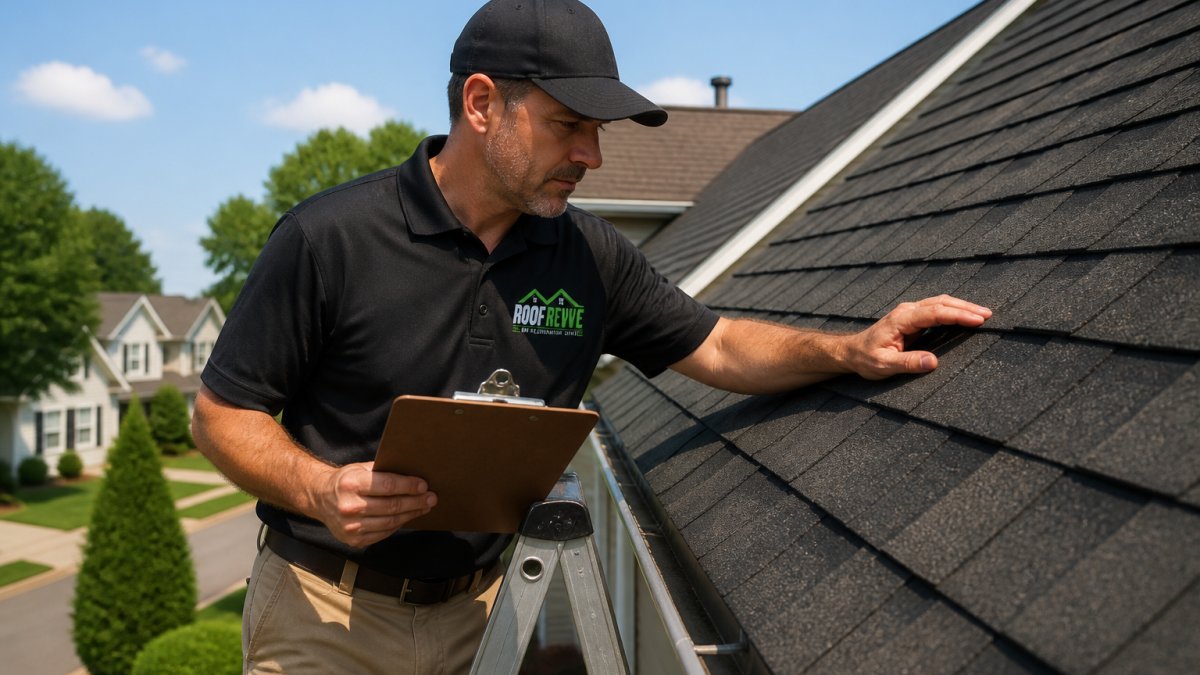
A proper roof rejuvenation inspection determines eligibility before anyone quotes a treatment. We use satellite measurements and drone imagery alongside an on-roof assessment so the proposal reflects the actual roof, not a guess from the driveway.
Use this checklist to understand what a qualified inspection covers:
- Confirm shingle type and that the roof is asphalt, not another material
- Measure total roof area and pitch
- Check granule loss across each plane, not just the visible front slope
- Test shingle flexibility at multiple points
- Inspect flashing at chimneys, vents, and valleys
- Look for active leaks, stains, or soft decking
- Photograph existing condition for the before-and-after record
- Confirm the roof qualifies for treatment, or recommend replacement if it doesn't
An honest inspection sometimes ends with "your roof doesn't qualify." That's a feature, not a failure. Treatment on an ineligible roof helps no one.
How Long Does Roof Rejuvenation Last?
Roof rejuvenation can add up to 18 years of service life, though the actual gain depends on the roof's starting condition, sun exposure, and climate. A roof already near the end of its life won't see the same benefit as one treated earlier in its decline.
This is where the salt air along the coast matters. Coastal homes face accelerated weathering, and shingles dry out faster in that environment.
The honest answer on lifespan: it varies. We tell homeowners what their specific roof can realistically expect based on the inspection, not a blanket promise.
What Drives the Variance
Four factors explain most of the difference between a roof that gets the full benefit and one that gets a few extra years.
- Starting condition. A roof treated early in its decline has more flexible material left to work with. A roof treated at the edge of failure has little to restore.
- Heat and UV exposure. South- and west-facing planes take the most sun and weather fastest. A roof with heavy sun exposure on one side may show uneven results across planes.
- Freeze-thaw cycles. Repeated freezing and thawing works shingles loose and stresses seals. Roofs in these cycles age differently than roofs in mild climates, and the treatment's benefit tracks that stress.
- Ventilation and roof design. A poorly ventilated attic traps heat and cooks the shingles from below, shortening the treatment's useful life. Steep pitches shed water faster and tend to hold up better than low-slope sections where water lingers.
How to Judge Whether the Gain Is Worth It
The right question is not "how many years will this add" in the abstract. It is whether the added years push replacement past the point where it makes sense for you, a sale, a refinance, or simply the years you plan to stay.
A practical way to think about it: if conditioning buys enough time that the eventual replacement lands after you have sold or after your budget has recovered, the treatment did its job. If the roof is likely to need replacement within a year or two no matter what, the added life is too short to justify the spend.
Roof Rejuvenation Warranty and Documentation
Every Roof Revive treatment carries a 6-year transferable warranty and a full photo record of the work. The transferable piece matters at resale, and the documentation matters to insurance carriers who want proof of maintenance on an aging roof.
That paperwork is often the deciding factor for homeowners facing a non-renewal letter. A documented maintenance record shows the roof is being actively managed, which is a different conversation than an untreated roof of the same age. We can't promise what any given carrier will decide, but we can hand you the record they ask for.
Ask for the before-and-after photo set and the warranty terms in writing before work begins. A legitimate operator provides both without being asked twice.
Conclusion
The real question isn't which option sounds better. It's which one your roof actually needs. Leaks, rot, and storm damage call for replacement. A structurally sound roof with dry, brittle shingles is a candidate for conditioning, and treating it early is what protects the investment.
If you're weighing a roof rejuvenation vs roof replacement decision on an aging shingle roof, start with an honest assessment. Roof Revive LLC provides free inspections using satellite measurements and drones, applies the USDA-certified GreenSoy™ treatment in a single day, and backs it with a 6-year transferable warranty. We only treat roofs that qualify, and we'll tell you plainly when replacement is the right call.
Frequently Asked Questions
Is roof rejuvenation worth it for aging asphalt shingles?
It depends on shingle condition. Rejuvenation restores flexibility and seals granules on roofs that are aging but structurally sound, and it can add years of service life at a fraction of replacement cost. Roofs with active leaks, storm damage, failing flashing, or severe granule loss need replacement instead. A professional assessment determines whether your roof qualifies, so you only pay for treatment when it will actually help.
How long can roof rejuvenation extend the life of asphalt shingles?
With a bio-based treatment like GreenSoy, documented results show up to 18 years of added roof life when the roof qualifies. The actual gain depends on the shingle's remaining service life, weather exposure, and ventilation. Older roofs near the end of their lifespan see smaller gains than roofs treated earlier. An inspection checklist helps confirm how much life remains before you decide between rejuvenation and replacement.
Can roof rejuvenation fix a leaking or damaged roof?
No. Rejuvenation conditions aging shingles; it does not repair leaks, flashing failures, storm damage, or structural problems. If water is already getting in, replacement or targeted roof repairs are the correct path. A roof rejuvenation inspection checklist should flag any leak signs, damaged flashing, or soft decking before treatment is scheduled, so you avoid spending money on a roof that needs replacement instead.
What does a roof rejuvenation warranty typically cover?
A roof rejuvenation warranty generally covers the treatment's performance for a set period. Roof Revive offers a 6-year transferable warranty backed by independent PRI laboratory testing and full before-and-after photo documentation. Transferability matters if you sell the home, and documentation can help satisfy insurance carrier maintenance requirements. Always read the warranty terms and confirm what voids coverage before booking treatment.